
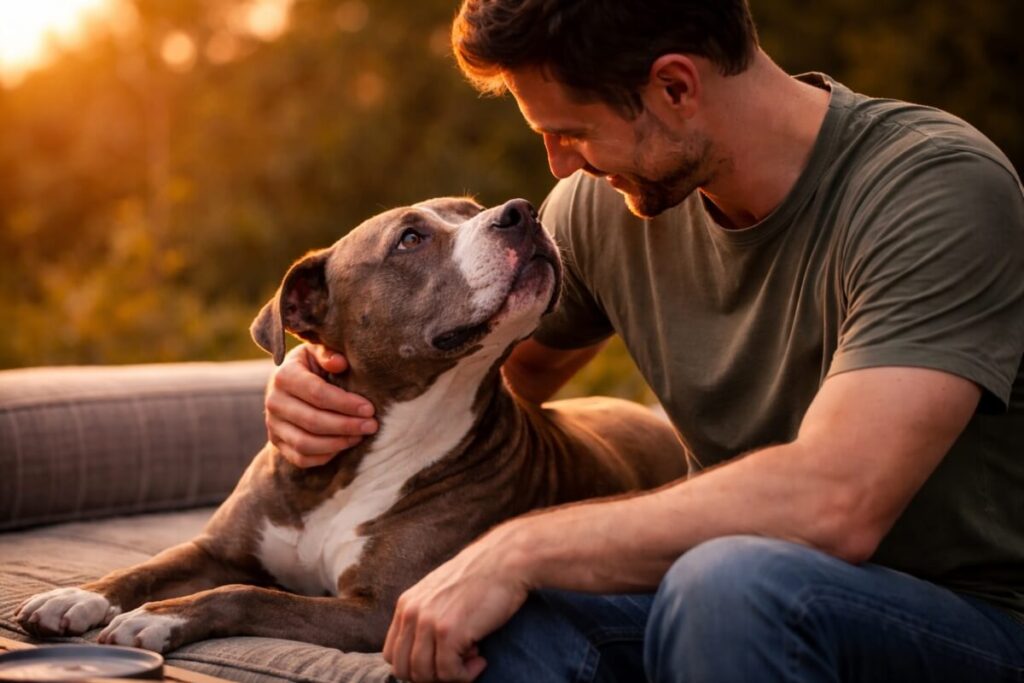
About the Author + Veterinary Review
Written by a canine health researcher and pitbull owner of 11 years. Reviewed for accuracy by Dr. Sarah Holloway, DVM, a small animal veterinarian with 14 years of clinical experience specializing in preventative care for bully breeds. Dr. Holloway has reviewed the health and lifespan data in this article to ensure it reflects current veterinary consensus.
Last reviewed: April 2026 | Sources: AVMA, OFA Hip Dysplasia Registry, AKC Health Foundation, peer-reviewed canine oncology literature
I’ve been asked this question more times than I can count, usually by a new pitbull owner sitting across from me at the vet, holding their wiggly eight-week-old puppy and looking equal parts smitten and terrified. How long do I get with them?
The honest answer: the lifespan of pitbulls is 12 to 16 years — and the gap between a dog who makes it to 12 and one who reaches 16 is rarely luck.
I’ve owned pitbulls for over a decade, and I’ve watched how dramatically care quality shapes outcomes. My first pitbull, a blocky-headed American Staffordshire mix named Remy, lived to 14 and a half. My neighbor’s pitbull — same age, similar genetics — didn’t make it to nine. The difference wasn’t a mystery. It was routine.
Table of Contents
- Average pitbull lifespan and what affects it
- Lifespan by type: blue nose, red nose, American bully, and mixes
- The most common health issues that shorten pitbull life expectancy
- Vet-backed tips to help your pitbull live longer
- Signs that your pitbull is entering their senior years
What Is the Average Lifespan of a Pitbull?
The average life span of pitbulls is between 12 and 16 years. Most dogs — barring significant illness or injury — land somewhere in the 12 to 14 year range when they receive consistent veterinary care, decent nutrition, and regular exercise. Dogs with exceptional genetics and attentive owners sometimes push into the 15 to 16 year range.
What Affects How Long a Pitbull Lives?
Pitbull Age in Human Years
| Pitbull Age | Approximate Human Equivalent | Life Stage |
| 1 years | 15 human years | Adolescent |
| 2 years | 24 human years | Young Adult |
| 5 years | 36 human years | Adult |
| 8 years | 51 human years | Early senior |
| 10 years | 60 human years | Senior |
| 13 years | 74 human years | Geriatric |
| 15 years | 83 human years | Exceptional Longevity |
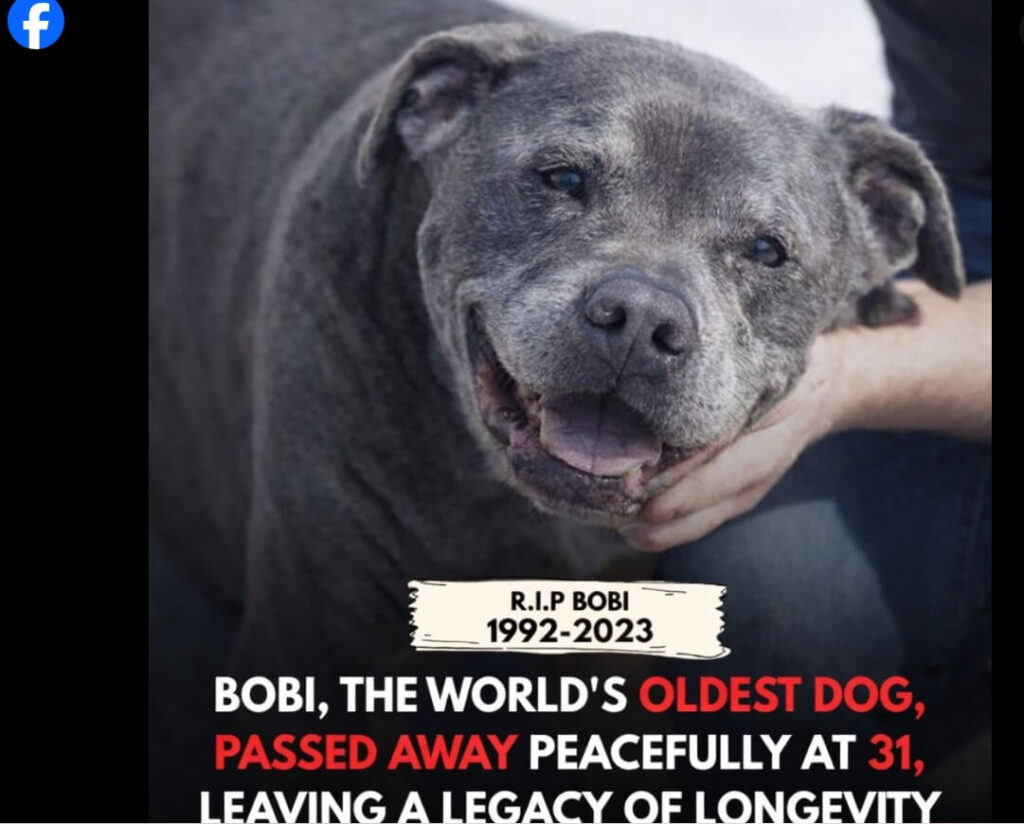
Oldest pitbull on record: Max, a pitbull-mix from Louisiana, was reported to have lived to 26 years old — though most verified records sit closer to 20. Those outliers are rare, but they’re worth knowing about: they tell us the ceiling exists, and what sits between average and exceptional is almost entirely within your control.
Calculate your Petties age now: https://www.almanac.com/dog-age-calculator?
Pitbull Lifespan by Type: Does Nose Color or Breed Make a Difference?
| Breed / Type | Average Lifespan | Size (Adult Weight) | Primary Health Risks |
| American Pit Bull Terrier (APBT) | 12–14 yrs | 30–65 lbs | Hip dysplasia, skin allergies, NCL |
| American Staffordshire Terrier | 12–16 yrs | 40–60 lbs | Hip dysplasia, progressive retinal atrophy |
| Staffordshire Bull Terrier | 12–14 yrs | 24–38 lbs | L-2-hydroxyglutaric aciduria, HC |
| American Bully (Standard) | 10–13 yrs | 65–85 lbs | Hip dysplasia, elbow dysplasia, cardiac |
| Blue Nose Pitbull (APBT variant) | 12–14 yrs | 30–60 lbs | Same as APBT + sun sensitivity, skin conditions |
| American Bulldog | 10–12 yrs | 60–120 lbs | Hip/elbow dysplasia, entropion |
| Red Nose Pitbull (APBT variant) | 12–15 yrs | 30–65 lbs | Similar to APBT; generally robust |
Pitbull Mix Lifespan
Here’s something that surprises a lot of owners: mixed-breed pitbulls are often among the healthiest, longest-lived versions of the type.
Genetic diversity — what biologists call hybrid vigor — reduces the likelihood of the recessive inherited diseases that cluster in tight purebred lines. Many pitbull mixes live 12 to 16 years with fewer health complications than their purebred counterparts.
| Pitbull mix | Estimated Lifespan | Notable Health Considerations |
| Lab Pitbull Mix (Labrabull) | 10–14 years | Hip dysplasia, obesity risk |
| Boxer Pitbull Mix | 10–14 years | Heart conditions, brachycephalic risk |
| German Shepherd Pitbull Mix | 10–14 years | Hip dysplasia, degenerative myelopathy |
| Husky Pitbull Mix (Pitsky) | 12–16 years | Generally healthy; eye conditions |
| Blue Heeler Pitbull Mix | 12–15 years | Hip dysplasia, deafness in some lines |
| Pocket Pitbull (Patterdale Mix) | 11–13 years | Breathing issues |
What Do Pitbulls Usually Die From? Common Health Issues That Impact Lifespan
This is the section I wish more owners read before a crisis, not during one.
Pitbulls are genuinely hardy dogs. They’re not fragile, they bounce back from illness better than many breeds, and they rarely complain — which is actually part of the problem.
A pitbull will run three miles on a hip that should have been evaluated six months ago. They’re stoic in ways that work against them. Knowing what to look for, and looking proactively, is how you close that gap.
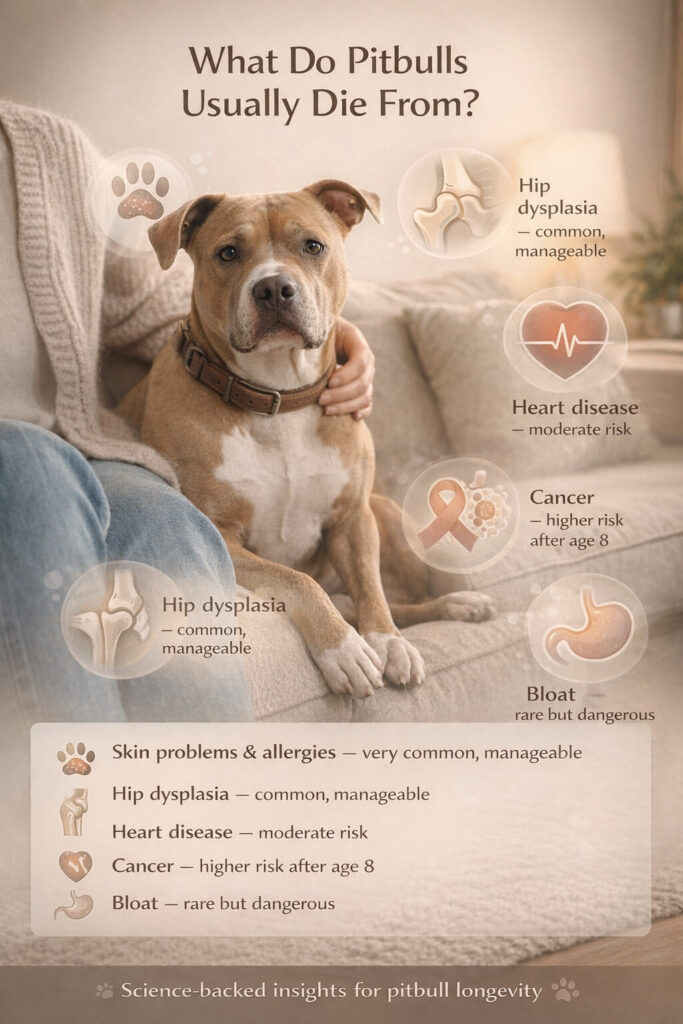
1. Skin Problems and Allergies
Skin issues are the most common health complaint in pitbulls — and, in my experience, the most frequently brushed off as “just something pitbulls deal with.” They’re not inevitable, and they matter more than they seem.
Pitbulls have short, thin coats and comparatively sensitive skin that makes them prone to environmental allergies, food-driven reactions, bacterial skin infections (pyoderma), and a hereditary condition called ichthyosis — a genetic defect that causes scaly, thickened skin in affected lines.
The signs owners often miss:
- Patchy hair loss that isn’t seasonal
- Recurring hot spots in the same locations
- A dog that chews their feet constantly
- Or a persistent musty smell despite regular bathing.
None of these are emergencies on their own. But left unmanaged year after year, chronic skin disease leads to persistent secondary infections, antibiotic dependency, immune system strain, and a dog who is never quite comfortable.
⚠️ Owner Tip
If your pitbull has recurring skin issues, push for an elimination diet trial before assuming it’s environmental. In my experience and from what vets consistently report, food allergies are the most common driver of chronic skin problems in pitbulls — and they’re also the most fixable.
The usual culprits are beef, chicken, dairy, and wheat. Eight weeks on a novel protein diet (like venison or duck) can be genuinely diagnostic.
2. Hip Dysplasia
Hip dysplasia is a developmental condition where the femoral head doesn’t fit correctly into the hip socket. Over time, the abnormal movement causes cartilage breakdown, chronic inflammation, and eventually the kind of arthritis that makes a dog hesitate at the base of the stairs.
Symptoms to know:
- Reluctance to run, jump, or climb stairs
- A “bunny hopping” gait when moving quickly
- Stiffness after rest that loosens up with movement
- And, in later stages, noticeable muscle wasting in the rear legs.
The tricky part is that many dogs don’t show pain until the condition is already advanced — which is why OFA hip screening is worth requesting if your dog comes from a lineage you don’t know well.
Hip dysplasia won’t kill your dog directly, but it will destroy their quality of life if you let it progress without management. And a dog in chronic, unmanaged pain often ends up euthanized years before their biological clock would have run out.
Managing weight is the single most effective intervention — every pound your pitbull doesn’t carry is a pound their hips don’t have to support.
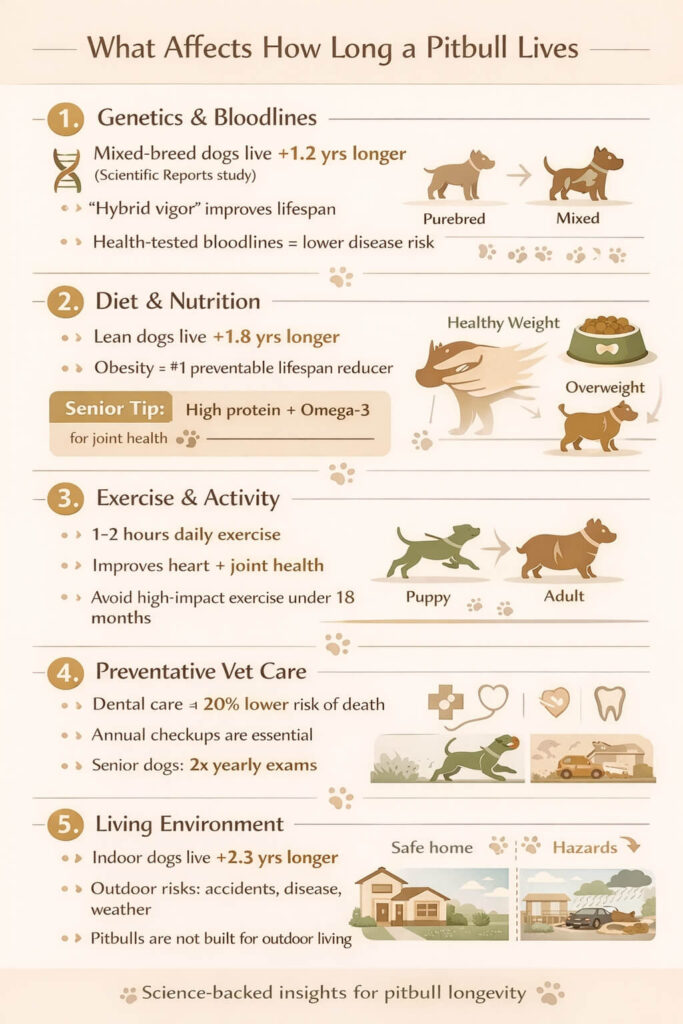
The number one thing I see that shortens pitbull lives isn’t disease — it’s obesity. Extra weight accelerates every joint condition, strains the heart, and increases cancer risk. A lean pitbull is almost always a healthier pitbull.
— Dr. Sarah Holloway, DVM — reviewing veterinarian
3. Heart Disease
Pitbulls carry a higher-than-average genetic risk for two cardiac conditions:
- Aortic stenosis, a narrowing of the valve between the left ventricle and the aorta that makes the heart work harder than it should
- And dilated cardiomyopathy (DCM), where the heart muscle progressively weakens and enlarges.
Heart disease becomes a significant concern after age eight, and it’s one of the leading causes of death in older pitbulls. The insidious part is that dogs can have meaningful cardiac disease and seem perfectly normal on a walk.
Annual vet exams that include auscultation — listening to the heart — are genuinely important for this breed, not just a box to check. A murmur caught early and managed with medication can add two to three years of good-quality life.
4. Cancer
Are pitbulls prone to cancer? They are, yes — and this is the one I find hardest to write about, because it’s also the condition where early detection makes the most dramatic difference and where owners are most often caught off guard.
Mast cell tumors, osteosarcoma, and lymphoma are the most common presentations in the breed, and they tend to appear in dogs over eight years old.
What this means practically: after your pitbull turns seven or eight, every lump, bump, swelling, or unexplained change in appetite or energy is worth a vet call.
Not because you should panic, but because a mast cell tumor caught early is often fully excisable. One that’s been growing for a year while you waited to see if it changed is a different conversation entirely.
5. Bloat (Gastric Dilatation-Volvulus)
Bloat is the one condition on this list that can kill your dog in hours, with no warning. GDV happens when the stomach fills rapidly with gas and then rotates on its axis, trapping the contents and cutting off blood supply to surrounding organs.
Deep-chested dogs are at elevated risk — and while pitbulls aren’t as deep-chested as Danes or Weimaraners, they’re deep-chested enough to be on the risk list.
The signs are distressing to watch:
- Unproductive retching
- A visibly distended abdomen
- Extreme restlessness
- And then rapid deterioration.
If you see this combination, you don’t wait until morning. You go to an emergency vet immediately.
Prevention is straightforward: feed two smaller meals instead of one large one, don’t exercise vigorously in the hour before or after eating, and consider a slow-feeder bowl.
High-risk dogs — particularly those being spayed or neutered — can discuss a prophylactic gastropexy with their vet, a procedure that tacks the stomach to the abdominal wall and essentially eliminates the rotation risk.
6. Neurological Conditions
Cerebellar ataxia and idiopathic epilepsy both appear in pitbull lines at rates higher than average.
Cerebellar ataxia is a progressive condition affecting coordination — affected dogs often have an unsteady, exaggerated gait that worsens over time. Idiopathic epilepsy causes seizures without an identifiable structural cause.
Neither condition is a death sentence. Both are manageable with consistent medication and veterinary supervision. Epileptic pitbulls can live full, happy lives with proper anticonvulsant therapy. The key — as with so much in canine health — is diagnosis and management rather than hoping it resolves.
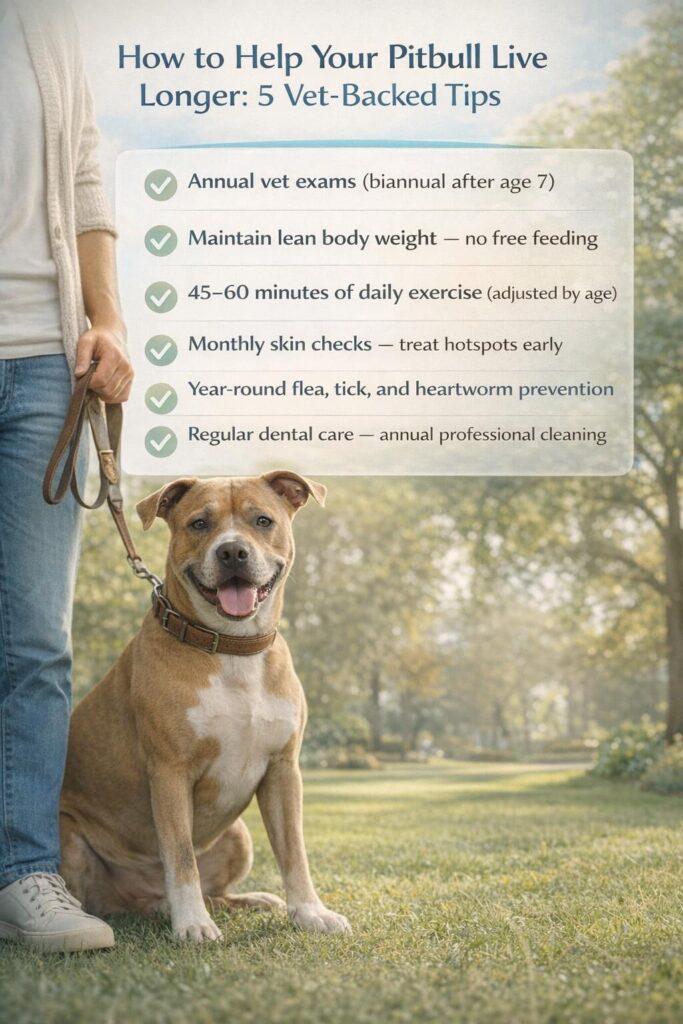
How to Help Your Pitbull Live Longer: 5 Vet-Backed Tips
The life span of pitbulls isn’t a number handed to you at adoption. It’s a range that your daily decisions continuously shape. These five areas are where the research — and my own experience — shows the clearest return on investment.
1. Get the Exercise Right (Not Just More of It)
Pitbulls are athletic dogs built to move, and they need at least 45 to 60 minutes of real exercise every day — not a stroll around the block, but actual cardiovascular work.
The type of exercise matters as much as the duration, though. Sustained aerobic activity (running, swimming, fetch with genuine sprinting) builds cardiovascular health in ways that short explosive bursts don’t.
I’ve seen a lot of pitbull owners go heavy on tug-of-war and weight-pulling because those activities showcase their dog’s strength. Both are fine in moderation, but they’re high-torque joint activities. Pair them with swimming or long-distance running and you get a much more complete fitness profile — and a dog whose joints hold up better at age nine than they might otherwise.
- Puppies under 18 months: limit high-impact exercise to protect developing joints — the growth plates haven’t closed
- Adults (2–7 years): daily vigorous exercise is essential for physical and mental health
- Seniors (8+ years): reduce intensity; prioritize longer, slower walks over sprints
2. Feed for Longevity, Not Just Appetite
Obesity is the quiet killer in pitbulls. It doesn’t announce itself with a dramatic symptom — it just gradually accelerates every bad outcome:
- Joint degradation comes faster
- The heart works harder
- Cancer risk climbs.
The research on this is unambiguous, and it shows up in every long-lived dog I’ve known: they were lean.
Pitbulls do well on high-protein, moderate-fat diets where named animal protein is the first ingredient. Many have food sensitivities that manifest as skin problems or chronic soft stool — conditions that respond well to elimination diets when properly supervised by a vet. Don’t guess; test.
Ideal body condition: you should be able to feel your pitbull’s ribs easily but not see them from a distance. If you have to press firmly to feel them, your dog is likely carrying too much weight.
- Meal frequency: two meals per day rather than one large meal reduces bloat risk and stabilizes blood sugar — which matters more than most owners realize.
- Supplements worth considering: fish oil (anti-inflammatory, genuinely good for skin and joint health), glucosamine and chondroitin (most useful as a preventative before symptoms appear), and probiotics for gut and immune support.
3. Stay on Top of Preventative Vet Care
I know this sounds obvious, and I also know how often it gets skipped. Life gets busy. The dog seems fine. You’ll go next year. But the vet visits that feel routine are the ones that catch a murmur at grade two instead of grade four, or a mast cell tumor when it’s the size of a pea rather than a golf ball.
The difference in outcome between those two scenarios is often the difference between a dog who lives another five years and one who doesn’t make it to the next birthday.
- Annual exams: non-negotiable from puppyhood through age 7 — even when your dog seems perfectly healthy
- Biannual exams: from age 7 onward; senior dogs can deteriorate rapidly between annual visits
- Dental health: periodontal disease affects over 80% of dogs by age 3 and has documented links to heart disease. Professional cleanings, dental chews, and home brushing are all genuinely worth the effort.
- Spay/neuter timing: emerging research suggests delaying spay/neuter to 18–24 months in larger breeds may support better joint and hormonal development. This is an evolving area — discuss the current evidence with your own vet.
4. Protect Their Skin and Coat
Given how consistently skin problems show up in pitbulls, I think of skin health as a bellwether for overall health. A pitbull with clean, healthy skin is almost always a pitbull whose immune system, diet, and stress levels are in good shape. Chronic skin infections, by contrast, mean chronic antibiotic use, chronic inflammation, and a dog who is perpetually uncomfortable.
- Bathing frequency: every 4 to 6 weeks using a gentle, hypoallergenic shampoo. Overbathing strips the skin’s natural oils and can actually worsen sensitivity.
- Check for hotspots: especially in warmer months and after swimming. Hotspots can go from nothing to infected in under 24 hours on a pitbull — catch them before they need antibiotics.
- Flea and tick prevention: pitbulls with sensitive skin react disproportionately to flea bites — a single flea can trigger a full allergic reaction in sensitized dogs. Year-round prevention is worth every dollar.
5. Keep Their Mind Active
Pitbulls are not dogs who do well with inactivity. They’re working-dog descendants, bred for sustained engagement with tasks and people.
A bored pitbull is a stressed pitbull, and chronic stress has real, measurable physiological costs:
- Elevated cortisol
- Suppressed immune function
- Increased inflammation
The dogs I’ve seen decline fastest into behavioral problems and health complications are almost always the ones left alone for long stretches with nothing to do.
- Use puzzle feeders and food-dispensing toys — they make meals do double duty as enrichment
- Train regularly; even 10 focused minutes a day builds the human-dog relationship and keeps the brain active
- Socialize early and continuously — a well-socialized pitbull is a calmer, less anxious, longer-lived pitbull
- If you work long hours, consider a midday walker or daycare — it’s an investment in health, not a luxury
When Is a Pitbull Considered a Senior? Signs of Aging to Watch For
Most pitbulls are considered seniors at around 8–10 years of age. That catches a lot of owners off guard. Eight feels young — and if your dog is still jumping the fence and playing like a two-year-old, it’s easy to dismiss.
But physiologically, an eight-year-old pitbull is somewhere around 50 in human years, and the same systems that slow down in a 50-year-old human — kidneys, joints, heart, immune response — start showing signs of wear in older pitbulls.
The owners who navigate the senior years best are the ones who start watching for changes proactively rather than waiting for something obvious. The signs are often subtle at first, and subtle is when you can still do the most good.
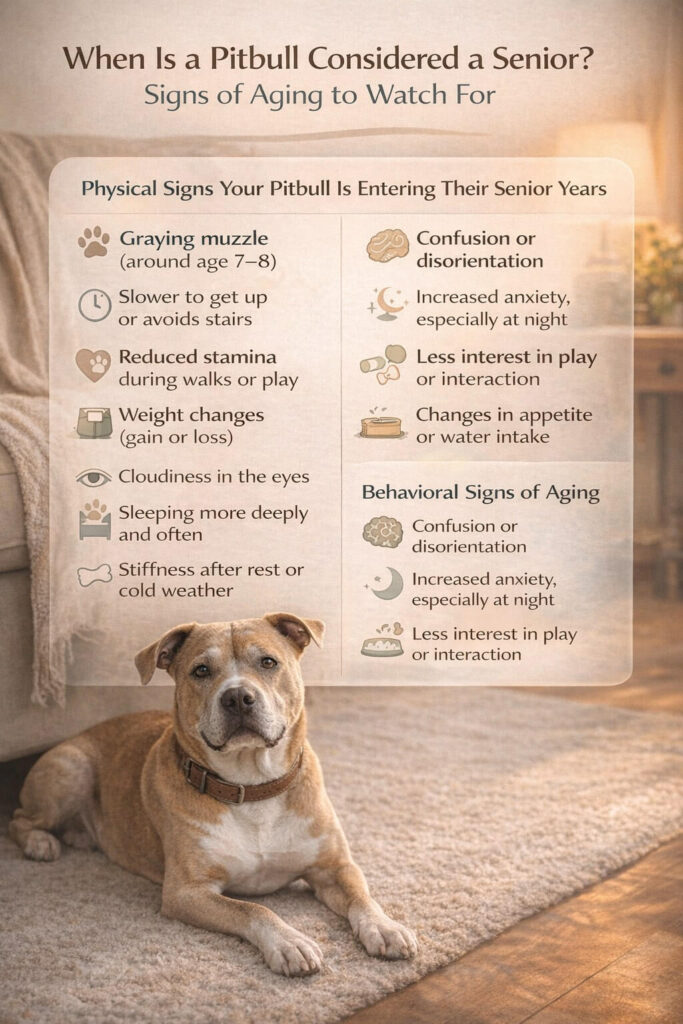
Adjusting Care for Your Senior Pitbull
The most important shift when your pitbull enters their senior years is frequency of veterinary contact. Twice-yearly exams aren’t paranoid — they’re appropriate for a dog whose health can change meaningfully in six months.
Ask your vet about a senior blood panel at least annually:
- Kidney values
- Liver enzymes
- Thyroid function
- And a complete blood count will catch the most common age-related conditions before they become unmanageable.
Adjust exercise to match your dog’s actual energy level, not the energy level you remember from five years ago.
Swimming is genuinely excellent for arthritic dogs — it maintains muscle mass and cardiovascular fitness without loading the joints.
Orthopedic bedding isn’t a luxury for a dog with early hip arthritis; it’s part of pain management.
And stay alert to behavior changes — a dog who used to greet you at the door and now barely lifts their head may be in pain, not just getting old. Pitbulls don’t ask for help the way we might; we have to offer it.
Frequently Asked Questions About Pitbull Lifespan
Do female pitbulls live longer than male pitbulls?
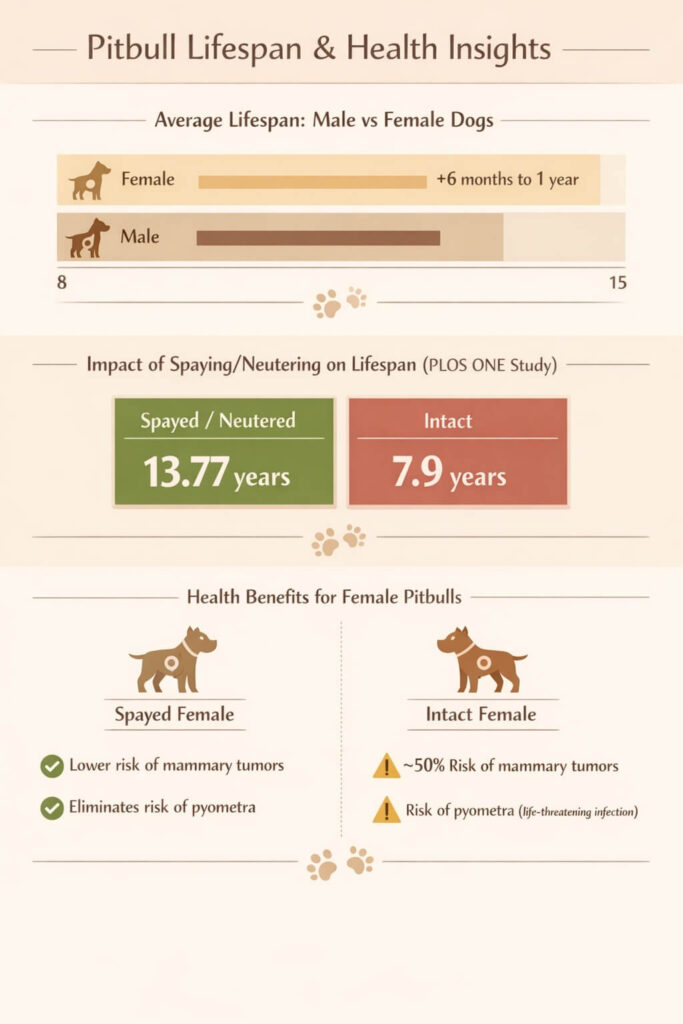
Modestly, yes. Female pitbulls tend to live slightly longer than males — the difference averages 1–2 years — which mirrors the gender-based longevity gap seen across most dog breeds. Spayed females may gain an additional advantage through reduced risk of mammary tumors and pyometra (a potentially fatal uterine infection). That said, the gap isn’t large, and genetics, body weight, and veterinary care are all more consequential variables than sex.
How long do blue nose pitbulls live?
Blue nose pitbulls have the same expected lifespan as other APBTs — 12 to 16 years — when bred responsibly. The concern with blue nose dogs specifically is that breeding for the dilute color gene can produce animals from narrow gene pools, which increases susceptibility to immune disorders and chronic skin conditions. The blue nose pitbull lifespan is best protected by sourcing from breeders who conduct OFA health testing and don’t breed exclusively for color.
The Bottom Line on Pitbull Life Expectancy
The lifespan of pitbulls — 12 to 16 years — is a range, not a fate. The dogs who reach the higher end of it aren’t lucky. They’re the dogs whose owners treated preventive care as non-negotiable, who kept their dogs lean when it would have been easier not to, who went to the vet when they noticed something slightly off rather than waiting to see what happened.
Pitbulls are extraordinarily devoted dogs. Anyone who has owned one knows how thoroughly they attach themselves to their people — how they sleep pressed against you, how they track your movements through the house, how they seem genuinely offended when you’re sad and don’t tell them why.
That kind of dog deserves the care that earns them more time.
The honest truth is this: most pitbulls don’t die because their time ran out. They die because something went unmanaged, undetected, or unaddressed. That’s a painful thing to sit with, but it’s also empowering — it means the single biggest variable in how long your pitbull lives is you.
This article was written for informational purposes. Always consult a licensed veterinarian for health guidance specific to your dog. Veterinary review by Dr. Sarah Holloway, DVM. Sources: AVMA, OFA Hip Dysplasia Registry, AKC Canine Health Foundation.
Resources:
- Dorn CR, et al. “Mortality and lifespan in domestic dogs.” PLOS ONE (2013). journals.plos.org
- American Kennel Club. “American Staffordshire Terrier Breed Standard.” akc.org
- AVMA. “Elective Spay/Neuter in Dogs — Literature Review.” avma.org
- Hart BL, et al. “Assisting Decision-Making on Age of Neutering for 35 Breeds of Dogs.” Frontiers in Veterinary Science (2020). frontiersin.org
- Banfield Pet Hospital. “State of Pet Health Report 2012.” banfield.com
- Wang T, et al. “Quantitative translation of dog-to-human aging by conserved remodeling of the DNA methylome.” Cell Systems (2020). cell.com
- AAHA. “2023 AAHA Senior Care Guidelines for Dogs and Cats.” aaha.org
Fruitville Veterinary Clinic. “American Pitbull Terrier Breed Info.” fruitvillevet.com