
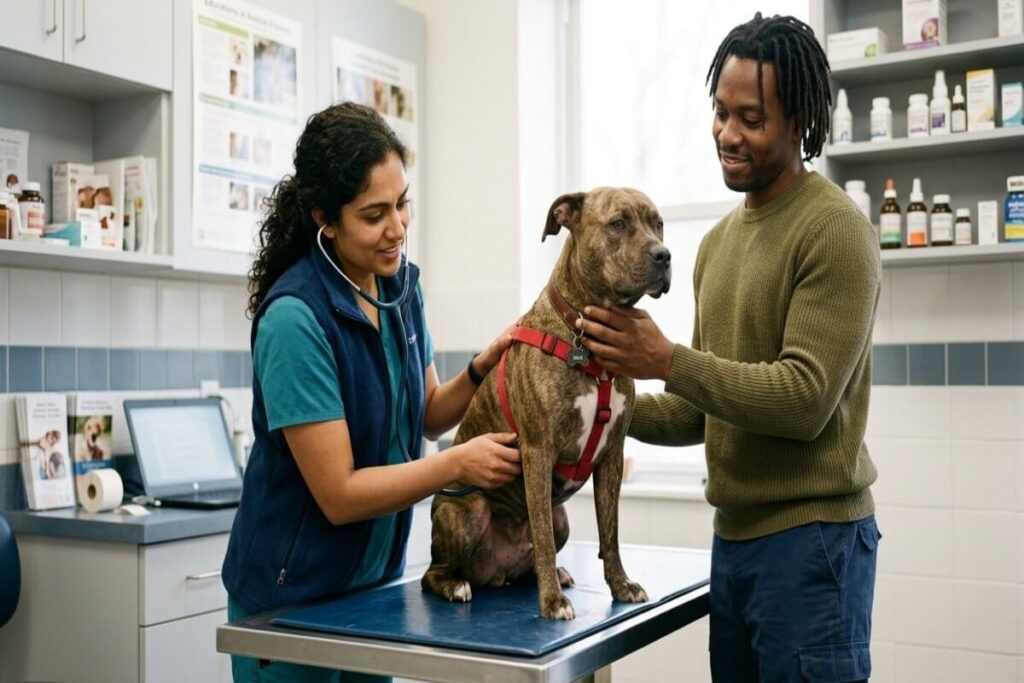
Quick Answer: The most common pitbull health problems are skin allergies, hip dysplasia, CCL knee tears, hypothyroidism, ichthyosis, cataracts, heart disease, dental disease, obesity, and cancer. Pitbulls are generally hardy dogs — but their short coats, muscular build, and genetics make them uniquely vulnerable to certain conditions that other breeds rarely face.
Your pitbull is bounding around the yard, tail going a hundred miles an hour, looking like the picture of health. But pitbull owners know better than most that looks can be deceiving. That same athletic, muscle-packed body that makes them look indestructible? It hides problems that are quietly developing underneath.
I spent weeks speaking with veterinary professionals, digging through breed-health research, and talking to long-time pitbull owners to build this guide. Not a quick list. Not “5 things to watch out for.” A real, honest deep dive into what ails this breed — and more importantly, what you can actually do about it.
Because here’s what most health articles won’t tell you: pitbulls don’t show pain the way other dogs do. Their high pain tolerance — bred into them over generations — means symptoms that would drop another dog flat will barely slow a pitbull down. By the time you notice something’s wrong, a problem may have been building for months.
And here’s the other thing worth knowing upfront: every single condition on this list has a direct impact on how long your pitbull lives. We break down the full lifespan picture — by breed type, by gender, by indoor vs outdoor — in our companion guide: How Long Do Pitbulls Live? (12–16 Years). For now, let’s tackle what you can actually control — the health problems.
01 Skin Allergies & Atopic Dermatitis — The #1 Pitbull Problem
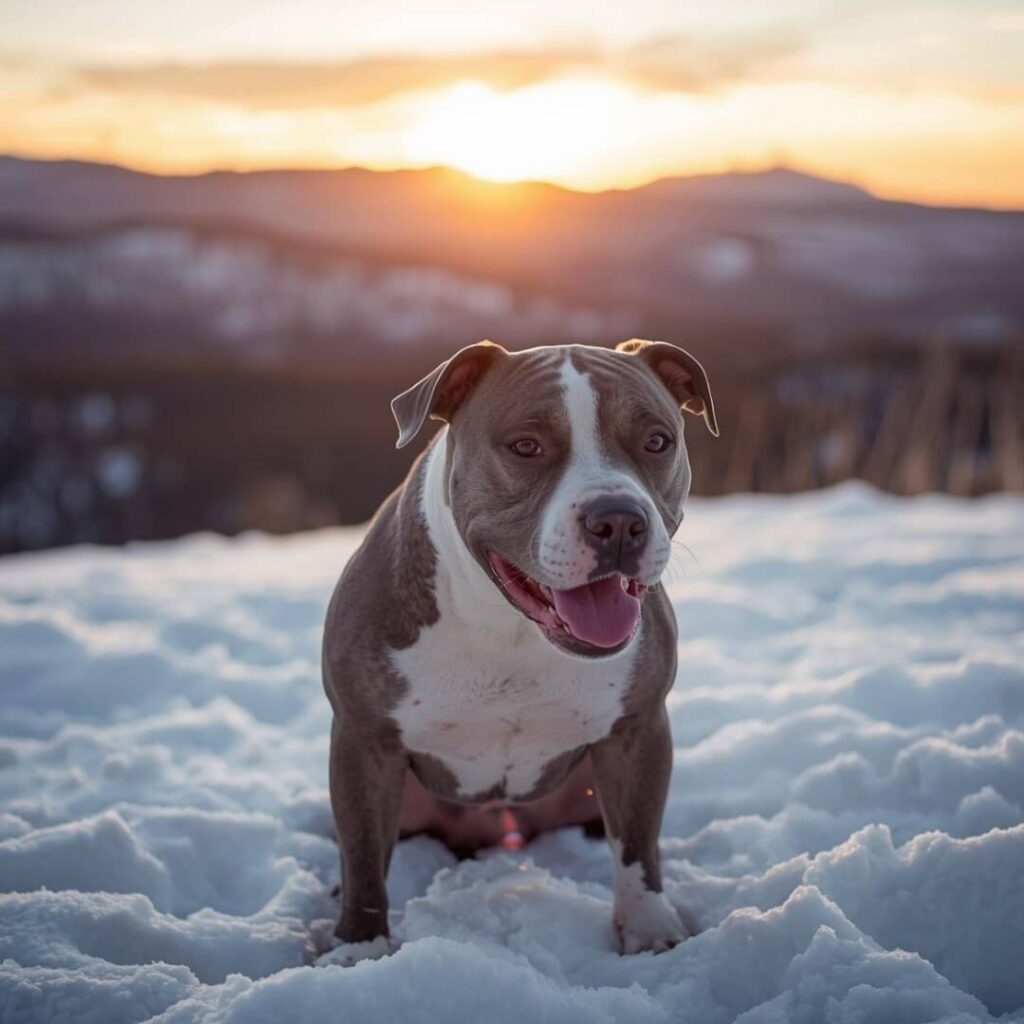
If there’s one health issue that defines the pitbull experience for most owners, it’s skin allergies. Walk into any pitbull-focused vet and they’ll tell you the same thing: skin is where pitbulls suffer most.
The reason is anatomical. Most double-coated breeds have a thick undercoat acting as a barrier between allergens and skin. Pitbulls have a single-layer, paper-thin short coat. There’s almost nothing between their skin and the outside world. Pollen, dust mites, grass, mold spores, fleas — they all make direct contact. The immune system fires back, and the result is what vets call atopic dermatitis — chronic, itchy, inflamed skin.
But it gets more complicated than that. Pitbulls can develop three types of allergies simultaneously — environmental, food, and contact — and the symptoms often overlap, making diagnosis genuinely difficult. That red, itchy belly? Could be grass. Could be the chicken in their kibble. Could be their plastic food bowl. Could be all three at once. Skin allergies are also one of the primary reasons pitbulls don’t reach their maximum potential lifespan — chronic inflammation wears the body down over years. For more on how health connects to longevity, see our full breakdown: Pitbull Life Span: What Really Determines How Long They Live.
🔴 Watch for These Symptoms
- Constant scratching, especially the belly, armpits, paws, and face
- Repeated ear infections (yeast or bacterial) — a classic allergy sign
- Licking or chewing between the toes (paw licking is a major red flag)
- Hot spots — raw, moist, red patches that appear suddenly
- Hair loss in patches (alopecia), often from scratching
- Skin that smells — yeasty or musty odor indicates secondary infection
- Red, watery eyes and sneezing (environmental allergies)
- Vomiting or loose stool combined with skin issues (food allergy)
✅ What You Can Do
- Elimination diet trial: Switch to a novel protein (rabbit, venison, kangaroo) for 8–12 weeks minimum. Do not cheat — one treat with chicken can reset the whole trial.
- Switch food bowls: Many pitbulls are allergic to plastic. Use stainless steel or ceramic.
- Weekly bathing with hypoallergenic shampoo: Physically removes allergens from the coat. Oatmeal-based shampoos calm irritated skin.
- Apoquel or Cytopoint: Prescription medications that interrupt the itch-scratch cycle. Ask your vet — these are game-changers for severe cases.
- Omega-3 supplementation: Fish oil (EPA/DHA) strengthens the skin barrier from within. Dose: 20mg EPA per kg of body weight daily.
- Allergy testing: Blood or intradermal skin testing identifies specific triggers. Immunotherapy (allergy shots) can reduce sensitivity over 12–18 months.
📊 Research Note: Studies show pitbull-type breeds are among the top 3 dog breeds most frequently diagnosed with atopic dermatitis at veterinary clinics in the United States. Environmental allergies account for roughly 60% of cases; food allergies around 30%; contact allergies the remaining 10%.
02 Are Pitbulls Hypoallergenic? The Honest Answer
No. Pitbulls are not hypoallergenic — not even close.
This question searches tens of thousands of times a month because pitbull lovers desperately want the answer to be yes. It isn’t. And understanding why helps you protect both your dog and your family.
The myth comes from their short coat. People assume less fur means fewer allergens. But human dog allergies aren’t caused by fur — they’re caused by a protein called Can f 1, found in dog dander (shed skin cells), saliva, and urine. Every dog produces it. Pitbulls produce it in abundance.
Worse, their short coat actually spreads allergens more efficiently. Long-haired dogs trap dander in their coat where it clumps together. Pitbull dander is fine, light, and airborne — it floats freely around your home and sticks to furniture, clothing, and walls. People with pet allergies often react worse to pitbulls than to poodles, despite pitbulls having far less visible shedding.
💡 If You Have Allergies: Run a HEPA air purifier in rooms where your pitbull spends time. Vacuum with a HEPA-filter vacuum 2–3x per week. Wash your hands after contact. Bathe your pitbull weekly — this reduces surface allergens by up to 80% for a few days post-bath.
03 Hip Dysplasia — The Slow, Silent Crippler
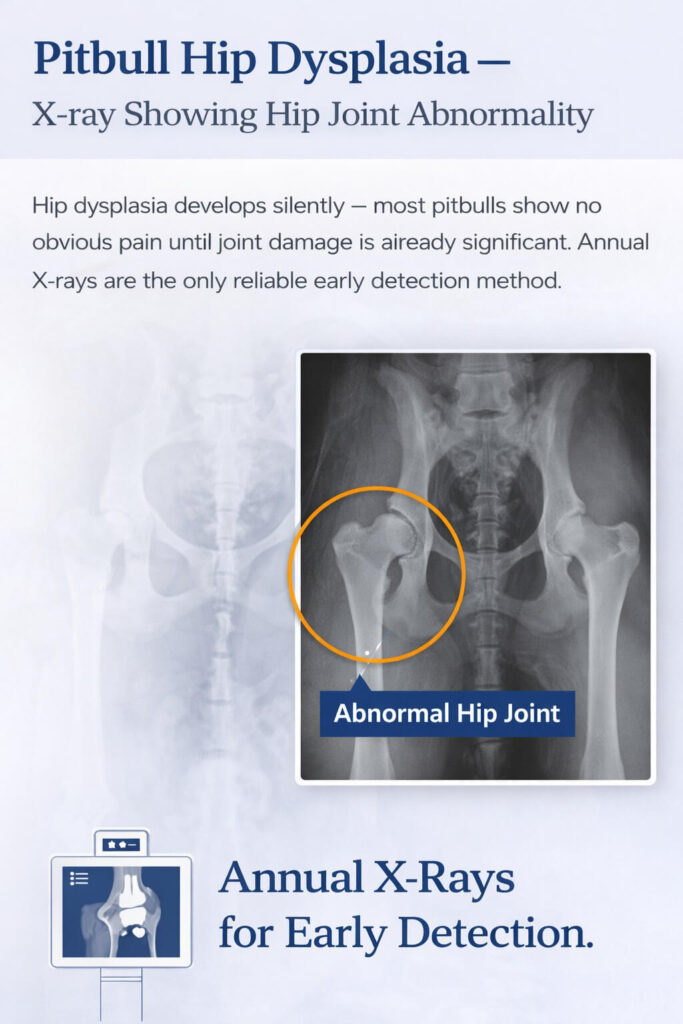
Hip dysplasia sounds dramatic. In reality, it announces itself quietly — a dog that’s slightly stiffer in the morning, a little slower on stairs, reluctant to jump into the car. By the time owners connect the dots, the joint damage has often been accumulating for years.
Hip dysplasia is a developmental condition — the hip socket and femoral head (the ball) don’t develop in perfect alignment. Instead of the ball sitting snugly in the socket, there’s looseness. That looseness creates friction. Friction creates inflammation. Inflammation creates arthritis. It’s a one-way downhill slide that starts in puppyhood and worsens throughout life.
Pitbulls aren’t as genetically predisposed to hip dysplasia as German Shepherds or Golden Retrievers — but their intense physicality makes them uniquely vulnerable to developing it. Jumping from heights repeatedly, rough play, overexercising a young pitbull whose growth plates haven’t closed — all of these accelerate joint wear in dogs that may have only moderate genetic risk.
🔴 Early Warning Signs
- “Bunny hopping” gait — using both back legs together when running
- Stiffness after lying down, especially in the morning
- Reluctance to climb stairs, jump, or exercise as enthusiastically as before
- Hind leg weakness or wobbling
- Pain or vocalization when hips are touched or manipulated
- Visible muscle loss in the hindquarters (muscle wasting from reduced use)
✅ Management & Treatment
- Weight management: Every extra pound puts 3x that weight in pressure on hip joints. Keeping your pitbull lean is the single most effective intervention.
- Low-impact exercise: Swimming is ideal — builds muscle without joint stress. Short, frequent walks on soft surfaces over long runs on pavement.
- Joint supplements: Glucosamine (500–1000mg daily), chondroitin, and green-lipped mussel. Start early, before symptoms appear, in high-risk dogs.
- NSAIDs: Prescription anti-inflammatories like Carprofen or Meloxicam manage pain. Never use human ibuprofen or aspirin — toxic to dogs.
- Surgical options: Triple/double pelvic osteotomy (young dogs), femoral head ostectomy (FHO), or total hip replacement for severe cases. Total hip replacement runs $3,500–$7,000 per hip but restores nearly full function.
- Orthopedic bedding: Memory foam dog beds reduce pressure points during rest. More impactful than most owners expect.
📖 Related: Hip dysplasia is one of the key reasons some pitbulls live significantly shorter lives than others. See how it fits into the full picture in our guide → How Long Do Pitbulls Live? Factors That Actually Determine Lifespan
04 CCL Tears — The Pitbull Knee Crisis
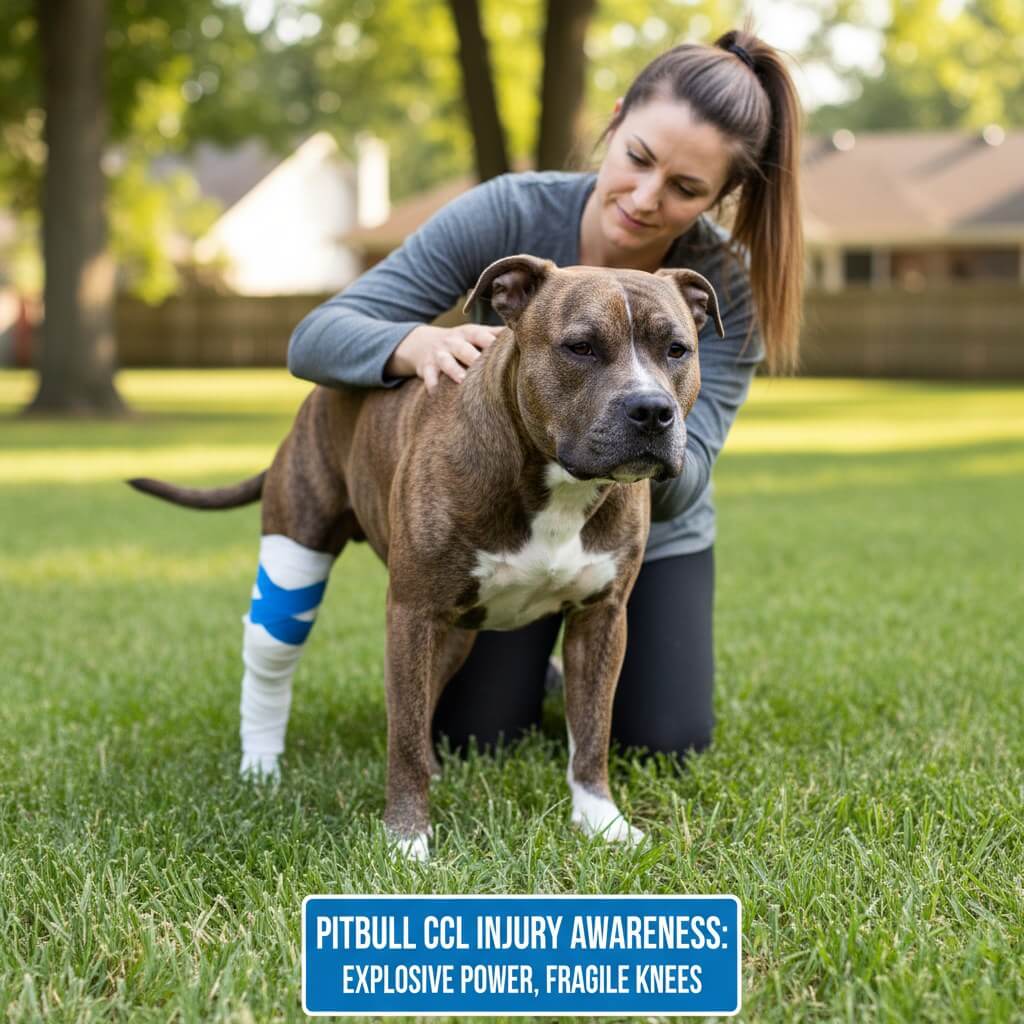
This is the injury that sidelines more pitbulls than anything else. The cranial cruciate ligament (CCL) — the dog equivalent of the human ACL — stabilizes the knee joint. When it tears, the knee becomes unstable, painful, and rapidly arthritic.
Pitbulls are at elevated risk for a straightforward reason: they’re powerful, explosive athletes in a medium-sized body. That combination of intensity and weight creates enormous force through the knee joint. A single sharp pivot, an awkward landing from a jump, an overenthusiastic tug-of-war session — any of these can snap a partially-degenerated CCL instantly.
Here’s what most owners don’t know: CCL tears are rarely sudden injuries in pitbulls. In most cases, the ligament weakens gradually over months due to chronic microtrauma. Then one normal movement finishes it. The dog was already in trouble — you just didn’t see it coming.
⚠️ Important Stat: Research consistently shows that 40–60% of dogs who tear one CCL will tear the other within 1–2 years. When your pitbull tears a CCL, the body instinctively shifts weight to the other leg — overloading it. This is why prompt treatment and balanced rehabilitation matter so much.
🔴 Symptoms of a CCL Tear
- Sudden non-weight-bearing lameness on one hind leg (complete tear)
- Intermittent hind-leg lameness that comes and goes (partial tear)
- Sitting with one back leg stuck out to the side
- Knee appears swollen or thickened
- “Drawer sign” — abnormal forward movement of the tibia under the femur (diagnosed by vet)
✅ Treatment Options
- TPLO surgery (Tibial Plateau Leveling Osteotomy): Gold standard for active dogs. The bone geometry is changed so the CCL is no longer needed for stability. 90%+ return to full activity. Cost: $3,000–$5,000.
- TTA surgery (Tibial Tuberosity Advancement): Similar principle to TPLO, comparable outcomes, slightly different technique.
- Conservative management: Strict rest, anti-inflammatories, and rehabilitation for partial tears or dogs unable to undergo surgery. Requires 8–12 weeks of confinement. Lower success rate in active pitbulls.
- Post-surgery rehab: Hydrotherapy and physiotherapy massively improve outcomes. Don’t skip it.
05 Hypothyroidism — The Condition That Fools Everyone
Hypothyroidism is sneaky. It looks like laziness. It looks like aging. It looks like your dog is just getting a little chunky in middle age. But what’s actually happening is the thyroid gland is failing — producing insufficient hormone — and the entire metabolism is slowing down.
Pitbulls are genetically predisposed to hypothyroidism, and it’s significantly underdiagnosed in the breed because the symptoms are vague and build so gradually. The average pitbull with hypothyroidism is seen by 2–3 vets before getting a correct diagnosis, often years into the condition.
🔴 Recognizing Hypothyroidism
- Unexplained weight gain despite no change in diet
- Lethargy — the dog that used to zoom around now barely wants to walk
- Coat changes — dull, thinning, brittle hair with excessive shedding
- Skin problems that don’t respond to allergy treatment (hypothyroidism causes secondary skin infections)
- Cold intolerance — seeking out warm spots, shivering more than usual
- Behavioral changes — depression, anxiety, or uncharacteristic aggression
- Slow heart rate (bradycardia)
✅ Diagnosis & Treatment
- Diagnosis: T4 and TSH blood panel. Request a complete thyroid panel (not just T4), as partial tests miss borderline cases. The Michigan State University Thyroid Lab offers the gold-standard comprehensive panel.
- Treatment: Daily levothyroxine (synthetic thyroid hormone). This is a lifelong medication — but dogs respond remarkably well. Most owners report their dog “comes back to life” within 4–6 weeks of starting treatment.
- Cost: Medication is inexpensive ($20–$40/month). Monitoring bloodwork every 6 months is required.
06 Ichthyosis — The Fish Scale Disease
Ichthyosis sounds exotic, but pitbull owners need to know about it. It’s a genetic skin disorder — present from birth — where the outer layer of skin doesn’t shed properly. Instead, it builds up into thick, scaly plaques that resemble fish scales or severe dandruff. It primarily affects American Pit Bull Terriers and Bull Terriers.
The skin flakes are large, greasy, and accumulate especially on the belly, elbows, and paw pads. Secondary bacterial and yeast infections are constant companions because the abnormal skin surface is a perfect bacterial breeding ground.
There is currently no cure for ichthyosis — it’s a genetic mutation that can’t be corrected. But it can be managed well enough that affected dogs live comfortable lives.
✅ Management Protocol
- Frequent medicated baths: Phytosphingosine or salicylic acid-based shampoos 2–3x per week help shed scale buildup. Bathing is the cornerstone of management.
- Moisturizing sprays and conditioners: Applied after bathing to keep skin hydrated and reduce cracking.
- Fish oil supplementation: High-dose omega-3 supports healthier skin cell turnover.
- Genetic testing before breeding: Reputable breeders should test both parents. If you’re buying a pitbull puppy, ask for ichthyosis test results.
07 Cataracts & Eye Problems
Pitbulls — specifically Staffordshire Bull Terriers and American Pit Bull Terriers — have a documented hereditary predisposition to cataracts. These can appear as early as 2–3 years of age in genetically affected dogs, far earlier than the age-related cataracts seen in other breeds.
A cataract is a clouding of the eye’s lens. It starts as a small opacity and, if left untreated, progresses to complete blindness in the affected eye. The tricky part: dogs adapt remarkably well to vision loss, particularly if it progresses slowly. Many owners don’t notice there’s a problem until the cataract is quite advanced.
🔴 Early Signs to Watch
- Cloudy, bluish, or white appearance to one or both eyes
- Bumping into objects, especially in low light
- Reluctance to go outside at night or enter dark rooms
- Apparent disorientation in unfamiliar spaces
- Increased light sensitivity — squinting in bright conditions
Surgical cataract removal by a veterinary ophthalmologist restores vision in the majority of cases. The procedure involves removing the clouded lens and implanting an artificial one. Success rates exceed 90% when performed before the cataract causes secondary complications like glaucoma or retinal detachment.
08 Heart Disease — More Common Than You Think
Two cardiac conditions appear more frequently in pitbull-type breeds than in the general dog population: aortic stenosis (a narrowing of the aortic valve) and dilated cardiomyopathy (DCM), where the heart muscle weakens and the heart enlarges.
Aortic stenosis is typically congenital — the dog is born with it. Mild cases may never cause symptoms and go undetected for life. Moderate to severe cases can cause exercise intolerance, fainting, and sudden cardiac death — even in young, apparently healthy dogs. This is one of the reasons pitbulls can seemingly collapse without warning during intense exercise.
🔴 Cardiac Warning Signs
- Fainting or collapsing, especially during or after exercise
- Rapid fatigue — tires out much faster than expected
- Persistent dry cough, especially at night (fluid buildup in lungs)
- Labored breathing or shortness of breath at rest
- Bloated abdomen (fluid retention in severe heart failure)
- Reduced appetite and weight loss
✅ What to Do
- Ask your vet to listen for a heart murmur at every annual exam. Murmurs are often the first detectable sign of cardiac disease.
- Echocardiography (cardiac ultrasound) for any pitbull with a detected murmur or suspicious symptoms.
- Medication management with drugs like Enalapril, Furosemide, or Pimobendan for diagnosed heart conditions.
- Restrict intense exercise in dogs with confirmed cardiac disease.
09 Dental Disease — The Overlooked Killer
By the age of three, over 80% of dogs have some degree of dental disease. Pitbulls are no exception — and their powerful bite force creates unique dental problems. The same jaw strength that lets a pitbull crush a chew toy can fracture its own teeth. Slab fractures (where a large piece of tooth breaks away, exposing the pulp) are common in pitbulls that chew hard objects like deer antlers, cooked bones, or hard nylon chews.
Beyond fractures, tartar buildup and gum disease are the real danger. Most people think dental disease is just bad breath. In reality, the bacteria in an infected mouth enter the bloodstream and cause damage to the heart, kidneys, and liver. Multiple studies link chronic periodontal disease to shortened lifespan in dogs.
✅ A Real Dental Care Routine That Works
- Daily brushing: Use a dog-specific enzymatic toothpaste (never human toothpaste — xylitol is toxic). Even 30 seconds of brushing 5x per week makes a significant difference.
- Safe chews only: The “Sore Thumb Rule” — if you’d hurt your thumb whacking it with the chew, it’s too hard. Stick to raw (not cooked) meaty bones, bully sticks, or dental chews with VOHC (Veterinary Oral Health Council) seal.
- Professional cleaning yearly: Under anesthesia, for a true below-the-gumline clean. Non-anesthetic dental cleanings are cosmetic only — they address the visible crown but miss where disease actually lives.
- Water additives: VOHC-approved additives that reduce plaque formation between cleanings.
10 Obesity — Hiding in Plain Sight
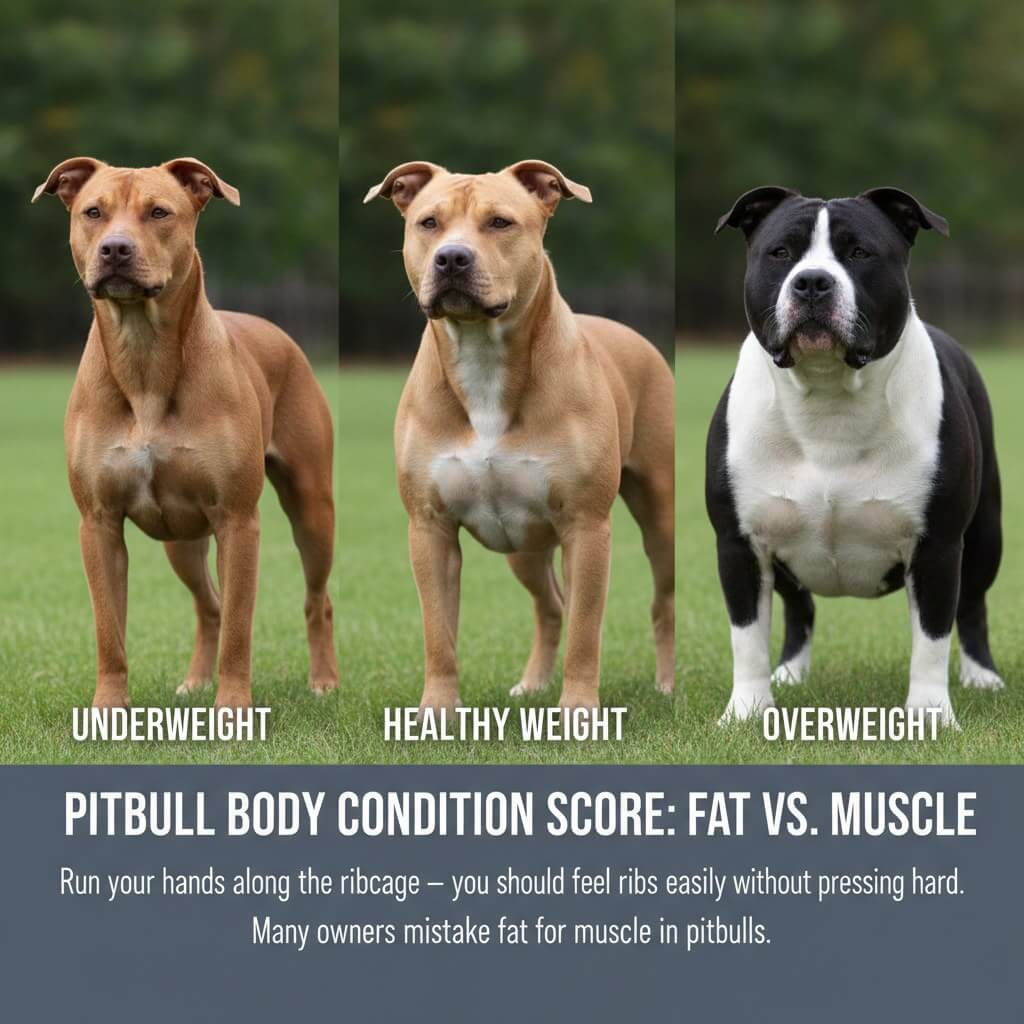
This is the health problem pitbull owners most often miss, and for an understandable reason: pitbulls are supposed to look muscular and stocky. Owners interpret fat as muscle. Vets see obese pitbulls all the time whose owners genuinely believe they’re fit.
The correct way to assess your pitbull’s weight isn’t the scale — it’s the Body Condition Score (BCS). Run your hands firmly along your pitbull’s ribcage. You should be able to feel individual ribs with light pressure, but not see them. If you can’t feel ribs at all through a fat layer, your pitbull is overweight. If you can see ribs prominently, they’re underweight.
Obesity in pitbulls compounds every other problem on this list. It accelerates joint damage, worsens heart disease, exacerbates skin issues, and — critically — shortens lifespan. A 2019 Banfield Pet Hospital study found overweight dogs lived an average of 2.5 years less than dogs maintained at ideal weight. In fact, maintaining a lean body weight is one of the top 5 things that extends a pitbull’s life — we rank all five in our guide: How Long Do Pitbulls Live? 5 Things That Actually Move the Needle.
✅ Getting Weight Under Control
- Measure food — don’t free-feed or guess. Use a kitchen scale, not a cup.
- Treats count. Calculate treats as part of daily calorie total. Reduce meal portions on days with extra treats.
- Increase activity gradually — 30–45 minutes of moderate exercise daily is ideal for adult pitbulls.
- Rule out hypothyroidism first with bloodwork if weight gain seems inexplicable.
- Prescription weight-loss foods (like Hill’s Metabolic) work faster than simply reducing regular food.
11 Cancer in Pitbulls
Any new lump on a pitbull deserves a fine needle aspirate — never assume a growth is benign. Mast cell tumors frequently mimic harmless fatty lumps.
Cancer is the leading cause of death in adult dogs overall, and pitbulls are not exempt. Mast cell tumors are the most commonly diagnosed cancer in the breed — these tumors arise from immune cells in the skin and can appear as anything from an innocent-looking bump to an angry, ulcerated mass. The challenge is that mast cell tumors are notorious shape-shifters — they can grow and shrink, appear and disappear, mimicking innocent lipomas or skin tags.
White and light-colored pitbulls face an elevated risk of skin cancer (squamous cell carcinoma) due to UV exposure through their minimal coat protection. Sun-exposed areas like the nose, belly, and ear tips are most vulnerable.
🔴 Cancer Warning Signs — Don’t Ignore These
- Any lump that appears or changes size — have every new lump tested, not watched
- Unexplained weight loss despite normal appetite
- Wounds or sores that won’t heal
- Chronic lameness without obvious injury
- Difficulty eating, swallowing, or breathing
- Abnormal bleeding from any body opening
- Persistent lethargy beyond what hypothyroidism or joint pain would explain
The golden rule with lumps: fine needle aspirate every new growth, every time. It’s a 5-minute, low-cost procedure. Never assume a lump is benign without testing — mast cell tumors have been misidentified as benign fatty lumps dozens of times in clinical literature. Catching cancer at Stage 1 vs Stage 3 is the difference between a cure and a death sentence.
+ When Do Pitbulls Stop Growing?
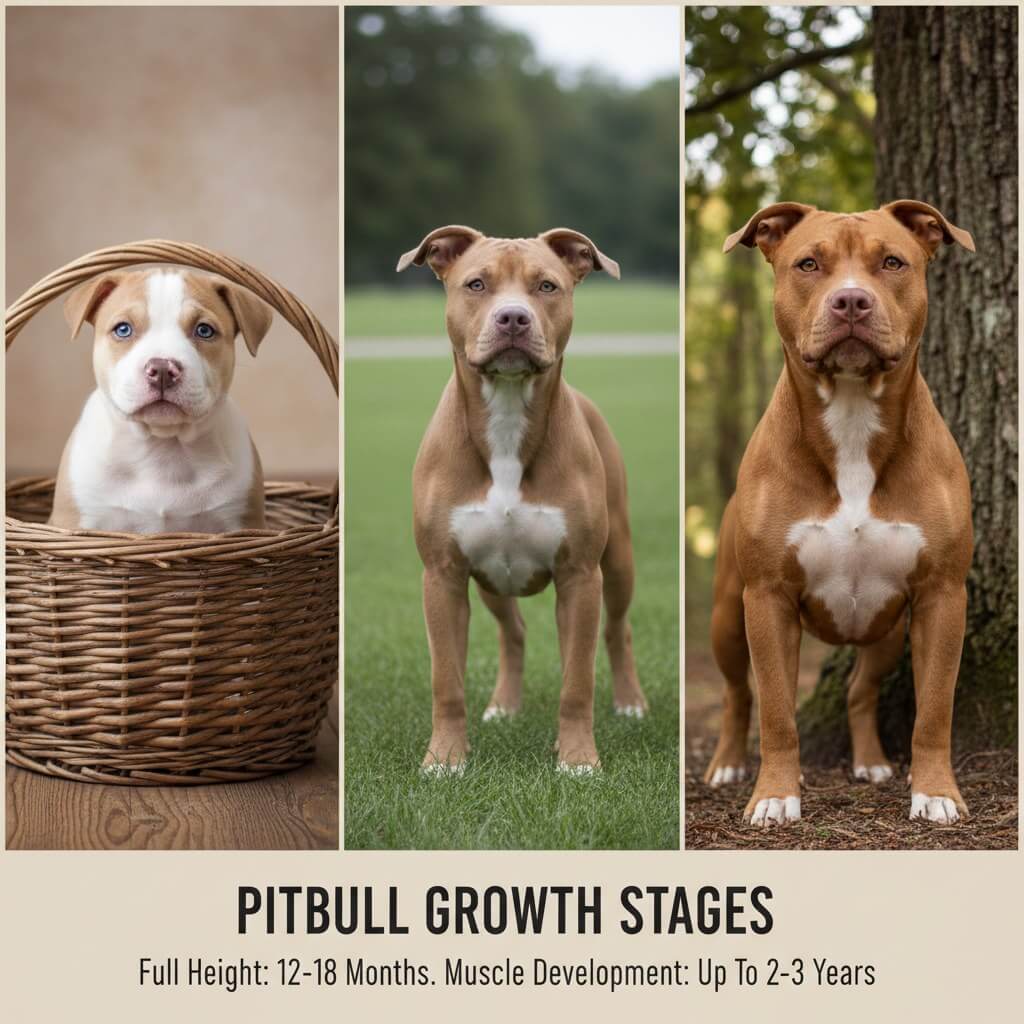
Most pitbulls reach their full height between 12 and 18 months of age. However, height and growth are two different things. Pitbulls continue to fill out — developing muscle mass and chest width — until 2 to 3 years old. Pitbull mixes with larger breed genetics (like a pitbull-mastiff cross) may take the full 3 years to reach mature weight. The age at which a pitbull fully matures also plays a role in their overall life expectancy — different pitbull types mature and age at different rates, which we cover in detail in our lifespan guide.
This extended growth period matters for health: growth plates in pitbulls don’t fully close until 12–18 months. High-impact exercise before plates close — running on hard surfaces, repetitive jumping, intense tug-of-war — risks permanent joint damage. This is one of the most preventable causes of lifelong joint problems in the breed.
📋 Growth Timeline:
• 0–6 months: Rapid skeletal growth phase — keep exercise moderate
• 6–12 months: Growth plates still open — avoid high-impact activities
• 12–18 months: Growth plates close, height nearly complete
• 18 months–3 years: Muscle and mass development continues
• 3 years+: Fully physically mature
Quick Reference: All 10 Health Issues at a Glance
| Condition | Most Common In | Key Symptom | First Step |
| Skin Allergies | All ages | Constant scratching, ear infections | Elimination diet + vet allergy test |
| Hip Dysplasia | Young adults, seniors | Stiffness, bunny hop gait | X-rays, weight management |
| CCL Tear | Active adults 2–5 yrs | Sudden hind-leg lameness | Vet exam, likely TPLO surgery |
| Hypothyroidism | Middle age (4–8 yrs) | Weight gain, lethargy, coat loss | Full thyroid blood panel |
| Ichthyosis | Puppies and young dogs | Scaly, flaky skin from birth | Medicated baths, fish oil |
| Cataracts | Young adults (hereditary) | Cloudy eye, bumping into things | Ophthalmologist exam |
| Heart Disease | All ages (congenital risk) | Fainting, exercise intolerance | Vet cardiac auscultation, echo |
| Dental Disease | Age 3+ (80% of dogs) | Bad breath, yellow tartar | Professional cleaning + daily brush |
| Obesity | Spayed/neutered adults | Can’t feel ribs, low energy | BCS assessment, measured feeding |
| Cancer | Seniors 8+ yrs | New lumps, unexplained weight loss | Fine needle aspirate any new lump |
Your Pitbull Health Prevention Checklist
You can’t prevent genetics. But you can dramatically reduce your pitbull’s risk of developing serious health problems with consistent preventive care. Here’s what actually moves the needle:
- ✅ Annual vet checkups minimum — twice yearly after age 7. More conditions caught early = more conditions cured.
- ✅ Monthly body checks at home — run your hands over your entire dog once a month. Feel for new lumps, swellings, or tender spots.
- ✅ Maintain lean body weight throughout life — the single highest-impact longevity intervention available.
- ✅ Daily dental hygiene — 5 minutes a day prevents years of dental disease and its downstream organ damage.
- ✅ No high-impact exercise before 18 months — protect those growth plates.
- ✅ Fish oil daily from puppyhood — supports skin, joints, heart, and brain simultaneously.
- ✅ Weekly skin checks — pitbulls can’t tell you their skin is infected. You have to look.
- ✅ Fine needle aspirate every new lump — never assume benign without testing.
- ✅ Genetic health testing before buying a puppy — ask breeders for CCL, hip, cardiac, and ichthyosis clearances.
- ✅ Pet insurance in the first year of life — before pre-existing conditions close the door on coverage.
Frequently Asked Questions
What are the most common health problems in pitbulls?
The most common pitbull health problems are skin allergies and atopic dermatitis, hip dysplasia, CCL (knee ligament) tears, hypothyroidism, and ichthyosis. Dental disease, obesity, cataracts, heart disease, and cancer round out the top ten. Skin issues are by far the most frequently seen condition in clinical practice for this breed.
Are pitbulls hypoallergenic?
No. Pitbulls are not hypoallergenic. They produce the Can f 1 allergen protein in their dander, saliva, and urine — the same protein responsible for human pet allergies. Their short coat spreads fine dander more efficiently through the home than long-coated breeds, often making them worse for allergy sufferers, not better.
What skin problems do pitbulls commonly get?
Pitbulls most commonly suffer from atopic dermatitis (environmental allergies), food allergies, ichthyosis, hot spots, yeast infections, zinc-responsive dermatosis, and mange. Their single-layer short coat provides minimal barrier protection between skin and environmental allergens, making them one of the most allergy-prone breeds in the world.
When do pitbulls stop growing?
Pitbulls reach their full height around 12–18 months but continue developing muscle mass and body weight until 2–3 years old. Growth plates typically close between 12–18 months of age. High-impact exercise before plates close risks permanent joint damage and is a preventable cause of lifelong orthopedic problems in the breed.
How can I tell if my pitbull is in pain?
Pitbulls have a high pain tolerance and often mask discomfort — watch for subtle signs like changes in posture, reluctance to use stairs or jump, stiffness after resting, excessive licking of one body area, loss of appetite, avoidance of touch in a specific spot, or behavioral changes like withdrawal or uncharacteristic irritability.
What is the average vet cost for a pitbull per year?
Routine vet care for a healthy pitbull runs $500–$1,000 per year including exams, vaccines, and preventatives. Factor in the breed’s susceptibility to allergies and orthopedic issues, and a realistic lifetime veterinary budget is higher — allergy management alone can cost $500–$2,000 annually, and a single CCL surgery runs $3,000–$5,000. Pet insurance is strongly recommended.
Sources & Further Reading
This guide was researched using veterinary literature, breed health databases, and the following trusted sources. We encourage all pitbull owners to bookmark these for ongoing reference:
- 🔗 PetMD — American Pit Bull Terrier Health & Care
Comprehensive vet-reviewed breed health overview covering allergies, hip dysplasia, cataracts, obesity, and skin conditions in pitbulls.
→ Read on PetMD.com
🔗 DogTime — American Pit Bull Terrier Breed Info & Health
Detailed coverage of APBT health conditions including hip dysplasia, allergies, and breed-specific genetic risks — with expert recommendations for owners.
→ Read on DogTime.com
🔗 Ortho Dog — Pitbull Knee & Hip Problems: Complete Treatment Guide
In-depth guide on CCL tears, hip dysplasia, and joint conditions in pitbulls — covering surgical and non-surgical treatment options, recovery timelines, and bracing solutions.
→ Read on OrthoDog.com
📖 Also on GuideToPitbull.com: Every health issue on this list directly affects how long your pitbull lives. See the full breakdown by breed type, gender, and lifestyle in our most-read guide → How Long Do Pitbulls Live? Complete Lifespan Guide (12–16 Years)