
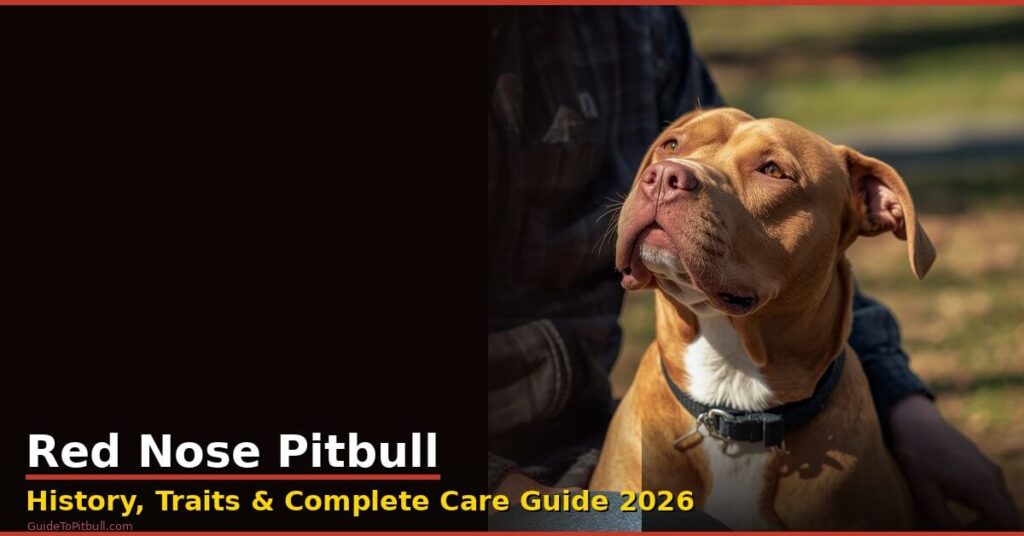
The Red Nose Pitbull carries one of the most documented and historically specific bloodlines in the entire pitbull family. While the Blue Nose is a product of deliberate color selection in relatively recent decades, the Red Nose traces directly to the Old Family Red Nose strain — an Irish lineage that arrived in America in the mid-1800s and has been maintained with remarkable consistency ever since. Understanding this history is not trivia. It explains why OFRN dogs are regarded differently by serious breeders, what the red coloring actually represents genetically, and why this variation has a distinct identity beyond its nose color.
- The Red Nose Pitbull originates from the Old Family Red Nose (OFRN) strain — a specific Irish bloodline dating to the early 1800s
- Red coloring comes from phaeomelanin — the same red/yellow pigment gene responsible for red coat in many dog breeds
- The OFRN strain was prized for working ability, gameness, and temperament — NOT just appearance
- Red Nose Pitbulls are American Pit Bull Terriers recognized by the UKC — the AKC does not register APBTs
- Temperament is identical to other APBT variations — the color has no effect on behavior or personality
- Hip dysplasia affects approximately 26% of APBTs — the single most important health screening for this variation
- Red Nose Pitbulls are NOT more aggressive than other pitbulls — the ATTS records an 87.6% pass rate for the breed
What follows is a guide built on research rather than mythology — one that covers the genuine history of the OFRN strain, the genetics behind the red nose, the specific health and care requirements of this variation, and the information every prospective owner needs to make an informed decision about bringing one of these dogs into their home.
The Real History of the Red Nose Pitbull: The Old Family Red Nose Strain
Of all the color variations within the pitbull family, the Red Nose has the most documented and historically significant lineage. The Old Family Red Nose — known in serious breeding circles as OFRN — is not simply a color designation. It is a specific bloodline with traceable origins, a documented purpose, and a reputation built over nearly two centuries of careful maintenance.
The story begins in early 19th century Ireland, where breeders were crossing Old English Bulldogs with Old English Terriers to produce working dogs of exceptional gameness and stamina. Within these early bull-and-terrier crosses, a distinctive red strain emerged — characterized by a copper-red nose, matching amber eyes, red toenails, and a coat ranging from fawn to deep chestnut. These dogs were not bred for their appearance. They were bred for their working ability, their courage, and their intelligence in the field.
When Irish immigrants arrived in the United States in the mid-1800s, many brought their dogs with them. The OFRN strain arrived in America and took root in certain family lines — maintained with care by breeders who valued the specific working characteristics of the bloodline over fashionable trends or color selection for its own sake.
Red Nose Pitbull Physical Traits: What Makes Them Distinct
The physical distinctiveness of the Red Nose Pitbull goes beyond the nose color itself. The entire warm-toned pigmentation system — nose, eyes, toenails, and coat — is interconnected through the phaeomelanin gene pathway, creating a cohesive appearance that is immediately recognizable to those familiar with the variation.
| Physical Trait | Male | Female | OFRN Specific Notes |
|---|---|---|---|
| Weight | 35–60 lbs | 30–50 lbs | OFRN lines often leaner, more athletic |
| Height | 18–21 inches | 17–20 inches | Measured at shoulder withers |
| Nose Color | Copper-red to warm pink — never black | Matches eye and toenail pigmentation | |
| Eye Color | Amber, warm brown, or honey | Never blue — blue eyes may indicate merle | |
| Coat Color | Fawn, chestnut, mahogany, red brindle | White chest markings common in OFRN | |
| Toenail Color | Red to copper — distinctive OFRN marker | One of the key OFRN identification traits | |
| Coat Texture | Short, smooth, stiff — low maintenance | Slight sheen — glossy when healthy | |
| Lifespan | 12–14 years | Well-bred OFRN lines average higher end | |
The Sun Sensitivity Factor
An important practical point that most Red Nose Pitbull guides omit: the lighter, pink-toned nose leather and lighter-pigmented skin of Red Nose Pitbulls is more susceptible to ultraviolet damage than the fully pigmented black noses of other dog varieties. Dogs with significant time in direct sunlight should have dog-safe sunscreen applied to the nose and any exposed pink skin areas, particularly in summer. This is not a major health concern but is worth managing to prevent chronic sun damage over time.
Red Nose Genetics: The Science Behind the Color
The red coloration in Red Nose Pitbulls is produced by phaeomelanin — the red and yellow pigment that is one of two primary pigments in mammalian coat color systems. The other is eumelanin, which produces black and brown coloration. In Red Nose Pitbulls, the phaeomelanin pigment is dominant and the eumelanin production is reduced or redirected, resulting in the warm copper-red tones across nose, coat, and eyes.
Unlike the Blue Nose, which requires two copies of a recessive dilution gene (dd) to express, the red coloration in the OFRN strain is not a simple recessive trait in the same way. The phaeomelanin expression in these dogs has been maintained through generations of selective breeding within the OFRN bloodline — meaning that responsible OFRN breeders are not necessarily conducting the same kind of tight color-specific inbreeding that characterizes less scrupulous Blue Nose breeding programs. This is one reason why the Red Nose, when sourced from genuine OFRN lines, tends to have fewer of the inbreeding-related health problems that can affect Blue Nose lines.
Red Nose Pitbull Temperament: What the Research Shows
The Red Nose Pitbull’s temperament is the temperament of an American Pit Bull Terrier — shaped by the OFRN strain’s historical selection for working ability, handler responsiveness, and human affiliation. The red nose color itself has zero effect on personality or behavior. Any claim to the contrary is unsupported by behavioral science.
- Red Nose Pitbulls are more aggressive
- They are a more dangerous color variant
- Red nose = better guard dog instinct
- They are harder to train than other pitbulls
- OFRN bloodline = fighting heritage problems
- Red color indicates “pure” pitbull status
- Color has zero effect on aggression levels
- ATTS pass rate: 87.6% — above average
- OFRN dogs are known for human affiliation
- Highly trainable — eager to please handler
- OFRN working traits = stamina + responsiveness
- No color indicates breed purity definitively
The OFRN strain historically selected dogs for a specific combination: gameness (persistence and determination), physical stamina, and — critically — a non-aggressive response to humans even under stress. This last trait was essential for dogs used in the field, where handlers needed to be able to intervene safely. The result is a bloodline that, when well-bred and properly socialized, produces dogs with unusually stable temperaments and deep handler bonds.
🎯Red Nose Pitbull Health: Conditions, Risks & Prevention
The Red Nose Pitbull shares the general health profile of American Pit Bull Terriers, with a few considerations specific to pigmentation and the OFRN bloodline. Overall, well-bred Red Nose Pitbulls from health-tested parents are among the more robust variations — but specific conditions require proactive monitoring.
| Condition | Prevalence | Specific to Red Nose? | Prevention | Management |
|---|---|---|---|---|
| Hip Dysplasia | ~26% of APBTs | Breed-wide | OFA screening of parents | Weight control, glucosamine, surgery if severe |
| Skin Allergies | Common | Breed-wide | High quality diet, flea prevention | Elimination diet, vet dermatologist |
| Sun Damage (nose) | Moderate risk | Red/pink noses specifically | Dog-safe sunscreen on nose/exposed skin | Avoid peak midday sun in summer |
| Hypothyroidism | Moderate | Breed-wide | Annual thyroid panel after age 2 | Daily medication — excellent prognosis |
| Heart Disease (DCM) | Less common | Breed-wide | Cardiac screening + grain-inclusive diet | Veterinary cardiology referral |
| Cruciate Ligament Tear | Moderate | Athletic breeds generally | Weight management, controlled exercise | Surgical repair — high success rate |
| Cataracts | Less common | Breed-wide | CAER eye exam of parents | Surgical removal if severe |
Complete Red Nose Pitbull Care Guide: Exercise, Nutrition & Grooming
Minimum 60–90 minutes daily. Running, fetch, structured walks, tug, agility. Mental stimulation equally important.
24–28% protein minimum. Named animal source first. Grain-inclusive recommended. 2 meals daily for adults.
Weekly brush. Bath every 4–6 weeks. Nail trim monthly. Ear check weekly. Dental care 2–3 times per week.
Annual wellness exam. Hip and thyroid screening. OFA results before 24 months. Dental cleaning annually.
Exercise — Why It Is Non-Negotiable
The OFRN strain was selected specifically for endurance and working capacity. A Red Nose Pitbull that does not receive adequate daily physical exercise will redirect that energy into behaviors owners find undesirable: destructive chewing, excessive barking, indoor restlessness, and difficulty settling. These behaviors are not temperament problems — they are energy management problems. An hour of structured exercise daily largely eliminates them.
| Age Stage | Exercise Type | Daily Duration | Important Note |
|---|---|---|---|
| Puppy (under 12 months) | Short walks, gentle play, mental games | 5 min per month of age × 2 | No high-impact until growth plates close |
| Adolescent (1–2 years) | Structured walks, fetch, tug, basic agility | 45–60 minutes | Channel energy into training sessions |
| Adult (2–8 years) | Running, fetch, swimming, weight pull, agility | 60–90 minutes | Mental stimulation equally important |
| Senior (8+ years) | Walks, gentle play, swimming | 30–45 minutes | Monitor joints — reduce impact activities |
Red Nose vs Blue Nose Pitbull: The Complete Comparison
Because these two color variations are frequently discussed together, a direct comparison is useful. The key distinction is historical and genetic — not temperamental or physical in any meaningful way.
| Factor | Red Nose (OFRN) | Blue Nose | Advantage |
|---|---|---|---|
| Historical Origin | Ireland, 1800s (documented) | Selective US breeding, 20th century | Red Nose — deeper history |
| Color Gene | Phaeomelanin (red pigment) | Dilution gene (dd locus) | Neither — both valid |
| Health Risk | Hip dysplasia, allergies, sun sensitivity | CDA + all APBT conditions | Red Nose — no CDA risk |
| Inbreeding Risk | Lower — OFRN lines historically diverse | Higher — color selection pressure | Red Nose — better genetic diversity |
| Price Range | $500 – $2,000 | $750 – $2,500+ | Red Nose — often more accessible |
| Temperament | Identical to APBT standard | Identical to APBT standard | Equal — color affects nothing |
| Rarity | Less rare — more common | Rarer due to recessive gene | Neither — rarity ≠ quality |
How to Find a Reputable Red Nose Pitbull: Breeder Checklist
- Can provide documented OFRN bloodline history — not just “we breed red noses”
- OFA hip and elbow certification on both parents — not optional for this variation
- CAER eye certification — particularly relevant given the pigmentation considerations
- Thyroid screening results available — hypothyroidism is screenable before breeding
- Both parents available to meet in person — temperament is observable
- Waitlist exists — reputable breeders don’t always have puppies immediately available
- Written health guarantee with specific terms — not a vague promise
- Asks you questions about your lifestyle and experience — screens buyers carefully
- “OFRN bloodline” without documentation — the term is used loosely by sellers who cannot verify lineage
- Multiple litters always available — suggests volume breeding rather than careful selection
- No health testing mentioned — OFA screening is a baseline expectation, not a premium service
- Price premium for “champion bloodline” without verifiable titles or testing
- Pressure to decide quickly — reputable breeders do not use sales pressure tactics
- Puppies available to leave at 5–6 weeks — minimum 8 weeks is a welfare standard
Frequently Asked Questions
Final Thoughts: The Red Nose Pitbull’s Enduring Value
The Red Nose Pitbull — and the OFRN strain specifically — represents something relatively rare in the modern dog world: a variation with a genuine documented history, maintained through generations by breeders who valued function and temperament as much as appearance.
The copper nose, amber eyes, and reddish coat are beautiful. But the more important inheritance from the OFRN bloodline is the working character that drove its original development: persistence, responsiveness to handlers, physical endurance, and the human affiliation that makes these dogs such loyal companions.
A Red Nose Pitbull from an ethical, health-testing breeder who understands the OFRN lineage is one of the most rewarding dogs a committed, experienced owner can have. The work required to earn that relationship — proper training, adequate exercise, consistent socialization — is exactly proportional to what you get in return.