
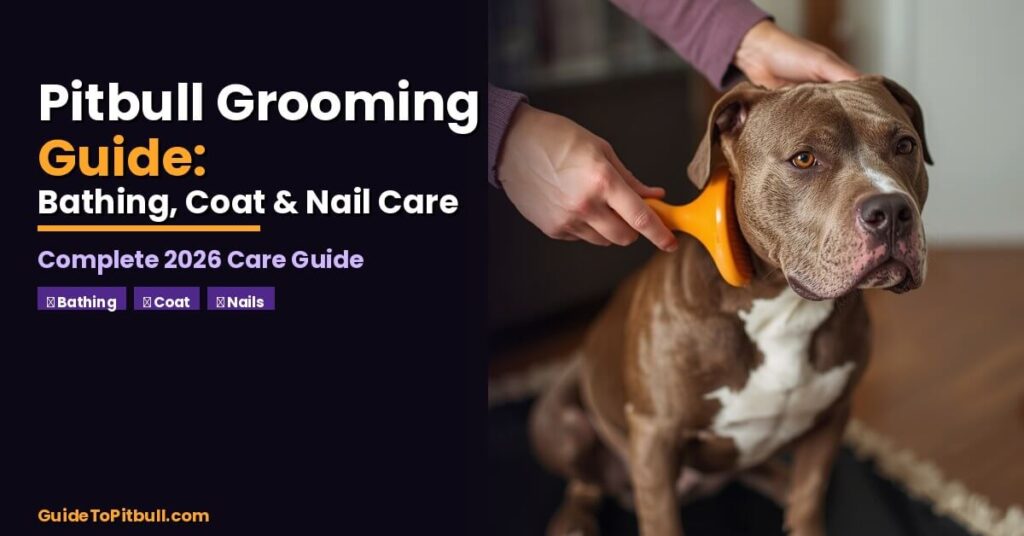
Pitbulls have one of the most forgiving coats in the dog world — short, single-layer, and requiring no professional trimming or styling. But “low maintenance” does not mean “no maintenance.” The breed’s sensitivity to skin conditions, its tendency toward allergies, and the common oversight of nail care mean that pitbull grooming done incorrectly — or not consistently — leads to preventable skin problems, painful overgrown nails, dental disease, and ear infections. This complete guide covers everything: the full grooming schedule, the step-by-step bathing method, how to safely trim pitbull nails without cutting the quick, ear cleaning, teeth brushing, and the tools that make every task easier and safer.
- Bathe your pitbull every 4–8 weeks — over-bathing strips natural oils and causes dry, itchy skin
- Always use hypoallergenic, fragrance-free dog shampoo — pitbulls are among the most allergy-prone breeds
- Trim nails every 3–4 weeks — the AKC recommends small, frequent trims so the quick gradually recedes
- Brush weekly with a rubber curry brush — distributes oils, removes dead hair, and allows skin health monitoring
- Check ears weekly — pitbulls with floppy ears are particularly prone to moisture buildup and infections
- Brush teeth 2–3 times per week — periodontal disease is the most common preventable health issue in dogs
- A shiny pitbull coat is primarily a nutrition result — omega-3 and omega-6 fatty acids make the biggest visible difference
Complete Pitbull Grooming Schedule: What, When and How Often
The most effective approach to pitbull grooming is a consistent routine — not intensive sessions spaced months apart. Regular, brief grooming sessions keep each task manageable, allow you to detect health changes early, and condition your pitbull to accept handling calmly. A pitbull that has been handled and groomed from puppyhood is dramatically easier to maintain than one introduced to grooming tools in adulthood.

| Grooming Task | Frequency | Best Tool | Why It Matters | Time | Priority |
|---|---|---|---|---|---|
| 🐾 Brushing | Weekly | Rubber curry brush | Distributes oils, controls shedding | 5–10 min | High |
| 🛁 Bathing | Every 4–8 Weeks | Hypoallergenic shampoo | Removes dirt, prevents skin issues | 20–30 min | High |
| 💅 Nail Trimming | Every 3–4 Weeks | Dog clippers or grinder | Prevents pain and gait problems | 10–15 min | High |
| 👂 Ear Cleaning | Check weekly, clean monthly | Vet ear cleaner + cotton | Prevents infection | 5 min | High |
| 🦷 Teeth Brushing | 2–3x per week | Dog toothbrush + dog paste | Prevents periodontal disease | 3–5 min | High |
| 👁️ Eye Cleaning | As needed | Damp soft cloth | Removes discharge, prevents staining | 2–3 min | Medium |
| 🐾 Paw Check | Weekly | Visual + manual inspection | Detects cracks, cuts, debris | 3–5 min | Medium |
| 🩺 Full Skin Check | Monthly | Hands-on full body | Early detection lumps, parasites | 10 min | Medium |
How to Bathe a Pitbull: Complete Step-by-Step Method
Bathing a pitbull incorrectly — too frequently, with the wrong shampoo, or with cold water and a rushed rinse — is responsible for the majority of pitbull skin problems that owners bring to veterinarians. Pitbulls have a single-layer, short coat that provides less barrier protection than double-coated breeds, making their skin more directly affected by the products and temperatures used during bathing. The right method protects their skin while providing the thorough cleaning their active lifestyle requires.

Always brush your pitbull’s coat before getting it wet. Water causes dead hair to mat against the skin, making it harder to remove and leaving residue in the coat after bathing. A 5-minute pre-bath brush with your rubber curry brush removes loose dead hair, reduces the amount of hair in your drain, and makes the shampoo application more effective.
Pitbulls have sensitive skin that reacts to temperature extremes. Water that is too hot strips natural oils and can cause skin irritation; water that is too cold creates stress and discomfort. Test the water temperature on the inside of your wrist before applying it to your dog — it should feel pleasantly warm, not hot. Wet the entire coat from neck to tail thoroughly before applying shampoo.
Apply shampoo starting at the neck and working toward the tail. Massage into the coat firmly enough to reach the skin — not just surface level. The skin is where bacteria, yeast, and allergens accumulate. For pitbulls with skin fold areas (armpits, groin, between toes), pay particular attention to thoroughly cleaning these zones where moisture and bacteria collect. Leave the shampoo in contact with the skin for 3–5 minutes if using a medicated formula.
Never pour water directly over a pitbull’s face. Use a damp, soft cloth or sponge to gently wipe the face, around the eyes, and in any skin folds around the muzzle. Apply a small amount of gentle facial shampoo to the cloth if needed. Keep all products away from the eyes and ear canals. This prevents water from entering the ear canals, which is a primary cause of ear infections in dogs.
The AKC specifically emphasizes that thorough rinsing is as important as the shampooing itself. Shampoo residue left on the skin causes itching, flaking, and irritation that owners often misattribute to allergies or skin conditions. Rinse until the water running off the coat is completely clear with no soap bubbles. Pay extra attention to the belly, armpits, and between the toes where shampoo accumulates.
Pat and blot dry rather than rubbing vigorously. Rubbing can irritate sensitive pitbull skin and cause micro-abrasions, especially in skin fold areas. Use a large, absorbent towel and press firmly against the coat to absorb moisture. Your pitbull will enthusiastically help with a shake — allow this before finishing with the towel.
If your pitbull will tolerate it, a hair dryer on the cool (not warm or hot) setting can be used to fully dry the armpit areas and friction zones that are prone to moisture accumulation. Never use hot air on pitbull skin — it causes burns and irritation. Focus particularly on skin folds and the areas between the toes, as moisture trapped in these zones leads to bacterial and yeast infections.
A light fragrance-free conditioning spray formulated for sensitive dog skin can be applied after drying to add moisture and enhance coat shine. Select products specifically designed for pitbulls or dogs with sensitive skin — avoid anything with artificial fragrance, alcohol, or chemical dyes. This step is optional but provides visible coat improvement, particularly for pitbulls in dry climates or those prone to coat dullness.
How Often to Bathe a Pitbull
Bathe every 4 to 8 weeks under normal conditions. Active pitbulls that spend time outdoors may need bathing closer to the 4-week mark; less active or indoor dogs can go 6 to 8 weeks between baths. Bathe sooner if your pitbull is visibly dirty, has developed an odor, has been exposed to road salt or irritating substances, or has a skin condition requiring medicated shampoo. Never bathe more than once every 2 weeks — the stripping of natural skin oils that results from over-bathing is a primary cause of dry, flaky, itchy skin in the breed.
| Shampoo Type | Best For | Key Ingredients | Avoid If |
|---|---|---|---|
| Hypoallergenic | All pitbulls — standard choice | Oatmeal, aloe vera — fragrance-free | Never: fragrances, sulfates |
| Medicated (Antifungal) | Yeast infections, hot spots | Ketoconazole, chlorhexidine | Only under vet guidance |
| Moisturizing | Dry, flaky skin — winter coats | Coconut oil, shea butter | Oily skin pitbulls |
| Deodorizing | Active outdoor pitbulls | Baking soda, natural enzymes | Dogs with skin sensitivities |
| Puppy Formula | Pitbulls under 12 months | Extra gentle, tear-free formula | Adult dogs (too mild) |
How to Trim Pitbull Nails Safely: Step-by-Step with Quick Guide
Nail trimming is the grooming task that most owners delay — and the delay makes it harder every time. Overgrown nails force the foot into an unnatural position, stress the joints, and can lead to painful splitting and infection. The AKC’s guidance is clear: small, frequent trims of tiny amounts are vastly preferable to infrequent large trims. When trimmed regularly, the quick — the blood vessel inside the nail — gradually recedes toward the toe, making each subsequent trim safer and less stressful for the dog.

| Nail Color | Quick Visibility | How to Find the Quick | Stop Point | Caution Level |
|---|---|---|---|---|
| Light / White Nails | Clearly visible | Pink area visible through nail | Just before pink begins | Easier |
| Dark / Black Nails | Not visible | Look for chalky white circle on cut surface | Stop at white circle | Extra Care |
| Mixed Color Nails | Partially visible | Use light nails as reference guide | Same amount as light nails | Medium |
- Apply styptic powder immediately — press firmly against the nail tip for 30–60 seconds
- Baking flour or cornstarch can substitute for styptic powder in an emergency — pack firmly against the nail
- Do not panic — a quick cut looks dramatic but is not a serious injury. Stay calm so your dog stays calm
- Give a high-value treat immediately — maintain the positive association with nail trimming despite the incident
- End the session on a positive note — do one more comfortable nail if possible, reward, and stop
Nail Trimming Desensitization — 5-Day Training Protocol
The AKC recommends a structured desensitization program for dogs that are anxious about nail trimming. This applies to both puppies and adult dogs new to the process:
- Day 1: Let your pitbull sniff the nail clipper or grinder. Give a treat and praise. Nothing more.
- Day 2: Touch the tool lightly to each paw. Give treats and praise. Do not clip anything.
- Day 3: Touch tool to paws and squeeze clipper so it makes the sound — or turn on grinder. Still no actual clipping. Treats and praise.
- Day 4: Touch tool to paws again with sound or vibration. Treats and praise. Build confidence.
- Day 5: Clip just the very tip from ONE front nail. Huge reward. End session immediately.
Pitbull Coat Care, Ear Cleaning and Teeth Brushing
Coat Care — How to Get a Shiny Pitbull Coat
Omega-3 and omega-6 fatty acids are the most impactful factor for coat shine. Fish oil, flaxseed, or a high-quality food with these fatty acids produces visible results within 4–6 weeks.
Rubber curry brush weekly distributes natural skin oils across the entire coat. This mechanical oil distribution is responsible for much of the natural sheen pitbulls can achieve.
The right shampoo frequency (4–8 weeks) preserves natural oils. Over-bathing is the single most common cause of dull, dry pitbull coats.
A fragrance-free conditioning spray post-bath adds moisture and gloss. Particularly beneficial in dry climates or for pitbulls showing coat dullness.
Monthly full-body skin check allows early detection of allergies, hot spots, or parasites before they affect coat condition. Run hands along the entire coat and part the hair to check skin.
Never shave a pitbull’s coat. Despite their short hair, shaving disrupts the natural hair growth cycle and can permanently affect coat texture. Pitbulls do not overheat more with their coat.
Ear Cleaning
Check your pitbull’s ears weekly — healthy ears appear light pink and clean with no odor. Clean monthly or when wax buildup or light odor is present. Apply a vet-approved ear cleaning solution to a cotton ball and gently wipe the visible inner ear surface in an outward direction only. Never insert anything deep into the ear canal. Signs requiring immediate veterinary attention include dark brown or black discharge, strong unpleasant odor, redness, swelling, or your pitbull repeatedly shaking its head or scratching at its ears.
Teeth Brushing
Dental disease is the most commonly diagnosed preventable health condition in dogs — the AKC recommends brushing 2 to 3 times per week at minimum. Use a dog-specific toothbrush (or finger brush) and dog toothpaste only. Never use human toothpaste — the xylitol and fluoride it contains are toxic to dogs. Start by letting your puppy taste the toothpaste, then gradually introduce the brush. Focus on the outer surfaces of the back teeth where tartar accumulates fastest. Dental chews and regular veterinary cleanings complement but do not replace home brushing.
Frequently Asked Questions
Final Thoughts: Grooming as Health Monitoring
The most valuable thing that consistent pitbull grooming provides is not a clean coat or trimmed nails — it is the regular, thorough physical contact with your dog that makes you the first to notice a lump, a skin change, a painful reaction to touch, or a behavioral shift that indicates something is wrong. Dogs that are handled frequently from puppyhood accept veterinary examination with less stress, recover from illness more cooperatively, and live longer measurably healthier lives. Grooming is not a cosmetic exercise. It is preventive healthcare delivered by the person who knows your dog best.